
November’s unpredictable weather patterns bring early winter storms that catch Taunton’s aging sewer infrastructure at its most vulnerable point. These transitional storms combine multiple destructive forces – heavy rain, freezing temperatures, and ground frost – creating perfect conditions for catastrophic failures in systems already weakened by decades of service. Understanding these compound threats helps property owners protect their connections to municipal systems dating back over a century.
The Convergence of Destructive Forces
Early winter storms create unique challenges different from both pure rain events and deep winter freezes. November storms often begin as rain, saturating ground and infiltrating sewer systems through aging joints and cracks. As temperatures plummet, this infiltrated water freezes, expanding and further damaging already compromised pipes. The cycle repeats with each storm, accelerating deterioration exponentially.
Ground conditions during November amplify storm impacts significantly. Partial frost creates impermeable layers that redirect surface water toward the path of least resistance – often into sewer systems through any available opening. Saturated soil above frost layers becomes unstable, shifting and stressing buried pipes. Freeze-thaw cycles in upper soil levels create ground movement that aging rigid pipes cannot accommodate without cracking or separating at joints.
Why Aging Infrastructure Suffers Most
Taunton’s sewer infrastructure, with significant portions installed between 1870 and 1950, faces particular vulnerability to early winter storms. Clay pipes common in older neighborhoods become brittle with age, cracking under freeze-thaw stress. Cast iron pipes suffer from decades of corrosion, creating weak points that fail under storm pressure. Even concrete pipes from mid-century installations deteriorate from chemical exposure and ground movement.
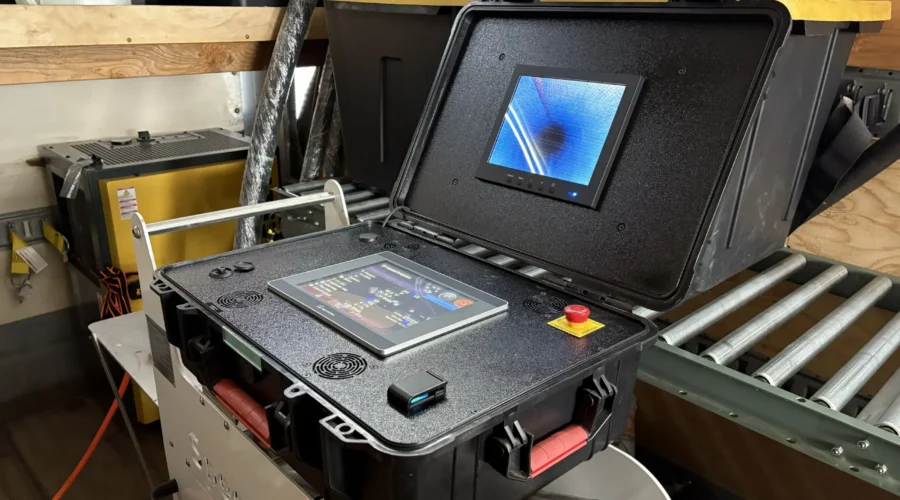
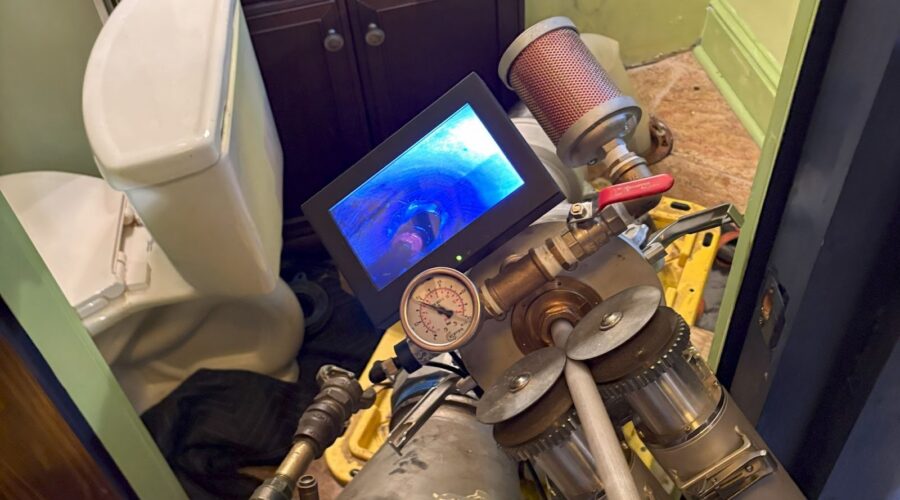
The accumulation of minor damage over decades creates critical vulnerabilities exposed by storm stress. Hairline cracks invisible during normal operation become major failure points when frozen. Root intrusion sites that allowed normal flow suddenly block when ice forms around root masses. Slightly separated joints that leaked minimally blow apart under hydraulic pressure from storm surges. Camera inspection reveals these hidden time bombs before storms trigger failures.
The November Window of Vulnerability
November represents peak vulnerability for aging sewer systems due to multiple converging factors. Pipes retain residual warmth from summer, creating temperature differentials that promote condensation and ice formation. Fall root growth remains active, with roots aggressively seeking moisture in sewer lines. Accumulated leaves create surface blockages that redirect water into unexpected paths. Municipal systems operate at capacity managing storm water, providing no buffer for residential overflows.
The unpredictability of November storms prevents adequate preparation for specific events. Unlike predictable January cold, November brings rapid weather changes catching systems unprepared. A 60-degree day followed by overnight freezing creates extreme stress. Rain changing to sleet fills pipes with slush that freezes solid. These volatile conditions exploit every weakness in aging infrastructure.
Recognizing Pre-Storm Warning Signs
Aging systems often provide subtle warnings before catastrophic storm failures. Increasingly slow drainage indicates developing restrictions that storms will overwhelm. New gurgling sounds suggest venting problems that worsen under pressure. Persistent odors point to cracks allowing gas escape that will admit storm water. Foundation cracks near sewer exits show ground movement stressing pipes.
More dramatic indicators demand immediate attention before storms arrive. Yard depressions over sewer lines indicate soil loss through pipe failures. Unusually lush vegetation strips suggest leaking nutrients from cracked pipes. Multiple fixture problems point to main line issues storms will exploit. These symptoms require professional evaluation before November storms transform problems into emergencies.
Emergency Storm Preparation Strategies
When storms approach and system vulnerabilities exist, specific preparations can minimize damage. Clearing all drains ensures maximum capacity for storm flows. Running enzyme treatments helps digest accumulations that restrict flow. Monitoring cleanouts during storms enables early problem detection. Having emergency equipment ready allows rapid response to developing issues.
Physical modifications provide additional protection with minimal investment. Temporary cleanout caps rated for pressure prevent storm surge backflows. Sandbags around vulnerable areas redirect surface water from problem zones. Plastic sheeting over yard depressions prevents direct water infiltration. These simple measures buy time for permanent solutions after storms pass.
Long-Term Infrastructure Adaptation
Properties with aging sewer connections benefit from modernization before complete failure occurs. Trenchless pipe lining creates new pipes within old ones, eliminating joints and cracks vulnerable to storm infiltration. This technology works particularly well for November installation before ground freezing prevents winter work. The seamless, flexible result accommodates ground movement and temperature extremes that destroy rigid pipes.
Strategic infrastructure investments prioritize storm resilience over temporary repairs. Increased pipe diameters handle storm surges traditional sizing cannot accommodate. Modern materials resist both chemical deterioration and physical stress. Improved joint designs maintain seals despite ground movement. These upgrades transform vulnerable systems into resilient infrastructure surviving future storms.
The Municipal Connection Challenge
Private sewer laterals connect to municipal mains creating shared vulnerability during storms. Overwhelmed city systems can force sewage backwards into private lines. Conversely, failed private laterals introduce storm water that overloads treatment plants. This interconnection means individual property problems affect entire neighborhoods during major storms.
Coordination with municipal improvement programs maximizes protection investments. Understanding city infrastructure plans helps time private upgrades effectively. Reporting storm impacts helps municipalities prioritize system improvements. Participating in regional resilience planning strengthens community-wide protection. This collaborative approach benefits all stakeholders facing shared challenges.
Insurance and Risk Management
Storm damage to aging sewer infrastructure often falls into insurance coverage gaps. Gradual deterioration exclusions may deny claims for pre-existing conditions storms expose. Flood insurance typically excludes sewer backup without specific riders. Documentation of system age and condition affects claim outcomes significantly.
Risk management strategies address coverage limitations proactively. Photo documentation before storms establishes baseline conditions. Professional inspection reports verify maintenance efforts. Upgrade receipts demonstrate investment in prevention. These records support claims while potentially qualifying for premium reductions.
Community Storm Resilience
Neighborhood age often correlates with infrastructure vulnerability, creating community-wide challenges. Shared storm experiences help identify area patterns requiring attention. Group advocacy for municipal improvements carries more weight than individual requests. Coordinated private upgrades may qualify for volume discounts. These collective approaches strengthen entire neighborhoods against storm impacts.
Information sharing multiplies individual preparation effectiveness. Social media groups enable rapid storm impact communication. Neighborhood meetings share successful protection strategies. Community tool sharing ensures everyone has emergency response capability. This collaborative resilience transforms vulnerable neighborhoods into prepared communities.
Preparing for Increasing Storm Intensity
Climate trends indicate November storms will intensify, requiring evolved preparation strategies. Higher rainfall rates overwhelm systems designed for historical averages. More frequent freeze-thaw cycles multiply stress events. Extended storm duration prevents recovery between events. Planning for extremes rather than averages ensures adequate protection.
Future-focused improvements build capacity for emerging threats. Oversizing replacements accommodates increasing storm intensity. Enhanced monitoring enables predictive maintenance. Flexible materials survive extreme stress events. These forward-looking investments protect property values despite uncertain climate futures.
November’s early winter storms expose every weakness in Taunton’s aging sewer infrastructure, but understanding these vulnerabilities enables effective protection. Recognizing warning signs, implementing storm preparations, and investing in resilient improvements prevents catastrophic failures. Modern technologies offer permanent solutions for systems that served well but now require adaptation. For comprehensive storm vulnerability assessment and infrastructure modernization, contact TID Trenchless before the next November storm tests your aging system’s limits.