As August progresses and rainfall remains scarce across Bristol County, Taunton property owners face an often-overlooked threat to their sewer systems. While most associate plumbing problems with excess water, severe drought conditions create equally dangerous scenarios for underground pipes. Understanding how low water tables and dry soil conditions impact sewer infrastructure helps prevent costly failures during these challenging periods.
The Hidden Mechanics of Drought Damage
Drought conditions fundamentally alter the soil environment surrounding sewer pipes in ways that aren’t immediately visible from the surface. As groundwater levels drop, soil loses its cohesive properties and begins to compact and shift. This movement removes the stable support that pipes rely on, causing them to sag, separate at joints, or even crack under their own weight.
The situation becomes particularly severe in areas with clay-rich soils, common throughout Taunton’s residential neighborhoods. Clay expands when wet and contracts dramatically when dry, creating significant ground movement. Properties near the former Glacial Lake Taunton basin face additional challenges as ancient lakebeds contain layers of fine sediments that become unstable during drought. This instability can cause pipes to shift several inches, breaking sealed joints and creating gaps where soil enters the system.
Compound Effects on Aging Infrastructure
Taunton’s sewer infrastructure, with some sections dating back to the 1870s, faces amplified stress during drought conditions. Older clay and cast iron pipes lack the flexibility to accommodate ground movement, making them prone to cracking and separation. Even newer PVC installations suffer when drought-induced soil shifting exceeds design tolerances.
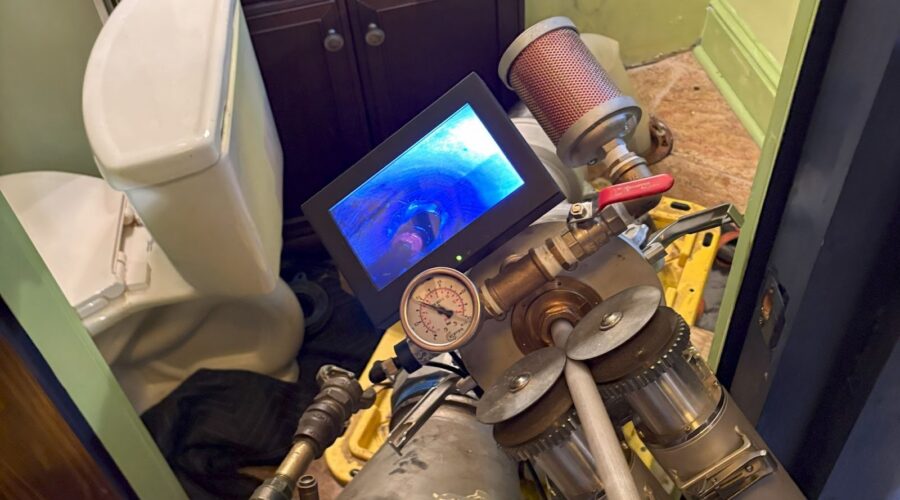
The problem compounds in neighborhoods like East Taunton and Whittenton where mature trees line streets above sewer mains. During drought, these trees send roots deeper and more aggressively in search of water, targeting the moisture always present in sewer lines. What might normally be manageable root intrusion becomes severe invasion as desperate trees exploit every vulnerability. Professional sewer camera inspection often reveals extensive root masses that developed during single drought seasons.
Recognizing Drought-Related Warning Signs
Property owners should watch for specific indicators that drought conditions are affecting their sewer systems. Ground settling along sewer line paths often appears as depressions or sunken areas in lawns. These visible changes indicate underground movement that likely damaged pipes. Inside homes, fixtures may drain differently as pipe angles change with shifting soil.
More subtle signs require careful observation but provide valuable early warning. Sewer odors becoming noticeable during evening hours suggest gases escaping through drought-created gaps. New sounds from plumbing systems, including gurgling or running water when no fixtures are in use, indicate air entering through compromised pipe joints. Foundation cracks appearing or widening during drought periods often correlate with underground utility movement that requires immediate professional evaluation from experts like TID Trenchless.
The Water Conservation Paradox
Drought conditions create a challenging paradox for conscientious property owners. While water conservation remains critical during shortages, reduced water flow through sewer systems allows problems to develop more rapidly. Less water means debris accumulates faster, pipe walls dry out and become more susceptible to root penetration, and biofilm growth accelerates in low-flow conditions.
Finding balance requires strategic water use that maintains system health while respecting conservation needs. Running washing machines and dishwashers with full loads maximizes water efficiency while providing periodic high-volume flows that help clear pipes. Weekly flushing of seldom-used fixtures prevents trap seal loss and maintains minimal flow through branch lines. These practices protect plumbing systems without wasteful water use.
Professional Solutions for Drought Challenges
Modern technology offers effective solutions for drought-related sewer problems that don’t require extensive excavation or water waste. Trenchless pipe lining creates structurally sound pipes that resist ground movement and root intrusion. The cured-in-place pipe process works particularly well during drought because it requires minimal water and doesn’t disturb already-unstable soil.
For immediate relief from drought-induced blockages, hydrojetting services provide thorough cleaning using surprisingly small water volumes. Professional equipment recycles water during cleaning, maximizing effectiveness while minimizing consumption. This approach removes accumulated debris and root masses that thrive in low-flow drought conditions.
Protecting Commercial Properties
Businesses throughout Taunton face unique drought-related challenges requiring specialized approaches. Restaurants experience grease buildup acceleration as reduced water flow fails to carry fats, oils, and grease through systems. Retail properties with large parking areas see increased soil subsidence affecting underground utilities. Manufacturing facilities using process water face regulatory compliance issues if sewer systems fail during drought restrictions.
Commercial property managers benefit from proactive drought planning that includes increased inspection frequency, adjusted maintenance schedules, and contingency plans for system failures. Regular professional drain cleaning becomes even more critical when water conservation reduces natural flushing action.
Long-Term Drought Resilience Strategies
Climate patterns suggest increasing drought frequency and severity in New England, making infrastructure adaptation essential. Properties with original clay or cast iron pipes should prioritize replacement with flexible materials that accommodate ground movement. Strategic placement of cleanouts allows easier maintenance access during challenging conditions.
Landscape modifications can reduce drought impacts on sewer systems. Deep-rooted plants placed away from sewer lines reduce soil moisture competition. Proper grading directs rare rainfall away from problem areas while preventing erosion. Permeable surfaces allow moisture to reach soil gradually, reducing dramatic wet-dry cycles that stress underground utilities.
Municipal Coordination During Drought
Taunton’s Department of Public Works implements drought response protocols that affect private sewer laterals. Understanding municipal policies helps property owners coordinate maintenance efforts effectively. During severe drought, the city may modify sewer flushing schedules, adjust treatment plant operations, and implement emergency repair priorities that affect service availability.
Property owners should report drought-related sewer issues promptly to help municipal crews identify problem areas. Coordination between private and public infrastructure maintenance maximizes resource efficiency during challenging conditions. Areas with known drought vulnerabilities receive priority attention when property owners communicate actively with city services.
Insurance and Financial Considerations
Drought-related sewer damage often falls into insurance coverage gaps that surprise property owners. Standard homeowner policies may exclude “earth movement” damage, including drought-induced soil shifting. Understanding coverage limitations before problems occur allows for informed decisions about supplemental coverage or self-insurance strategies.
Documentation proves crucial for any potential claims or tax deductions related to drought damage repairs. Photograph visible ground changes, maintain professional inspection reports, and track all maintenance and repair expenses. This documentation supports insurance claims, justifies preventive maintenance investments, and may qualify for disaster-related tax relief in severe drought declarations.
Creating Drought Response Plans
Effective drought management requires planning before crisis conditions develop. Establish relationships with qualified plumbing professionals who understand local soil conditions and drought impacts. Schedule inspections during early drought stages to identify vulnerabilities. Develop water use strategies that balance conservation with system maintenance needs.
Emergency response plans should include water shut-off locations, emergency plumber contacts, alternative sanitation arrangements, and communication protocols with neighbors who might be similarly affected. Properties with high-risk factors benefit from preventive upgrades during normal conditions rather than emergency repairs during drought crises.
Late summer drought creates serious but manageable challenges for Taunton’s sewer infrastructure. Understanding the mechanics of drought damage, recognizing early warning signs, and implementing appropriate protective measures prevents most drought-related failures. Modern trenchless technologies offer permanent solutions that protect properties through future drought cycles. For comprehensive drought resilience planning and system evaluation, contact the experienced professionals at TID Trenchless before dry conditions create wet problems inside your property.