Quick Answer: A broken sewer line usually shows up as foul odors, slow drains, gurgling sounds, sewage backup, soggy yard patches, indoor mold, or recurring clogs. Seeing more than one of these? Get a sewer camera inspection before it gets worse.
The most common signs of a broken sewer line are foul odors near drains or in your yard, slow drainage across multiple fixtures, gurgling sounds from toilets, sewage backup in lower-level drains, unusually soggy or lush yard patches, unexplained indoor mold, and recurring clogs that keep coming back. If any of these sound familiar, here is what you need to know and what to do next.
For homeowners throughout Southeastern Massachusetts, this is especially relevant. A large portion of the housing stock in cities and towns like Taunton, Brockton, Bridgewater, and Raynham was built before 1980, when cast iron and clay sewer pipes were standard. Those materials have a lifespan, and many of them are well past it. Add in decades of freeze-thaw cycles, tree root pressure, and shifting soil, and you have conditions that accelerate sewer line damage faster than most homeowners expect.
The good news: broken sewer lines almost always give warning signs before they fail completely. Knowing what to look for can save you from a much bigger, more expensive problem down the road. Here are seven signs your sewer line may be broken, and what to do if you notice them.
1. Foul Odors Coming from Drains or Your Yard
A properly functioning sewer system is a sealed system. You should never smell sewer gas inside your home or in your yard under normal circumstances. If you are picking up a persistent sulfur or sewage smell near your drains, around your foundation, or in a specific area of your yard, something in the line has likely cracked or separated enough to let gas escape.
Before assuming the worst, check any floor drains or fixtures that rarely get used. The P-trap beneath them may have simply dried out. Run some water into those drains and see if the smell clears. If it does not, or if the odor is coming from multiple areas of the home, the issue is deeper in the line.
For homes with original cast iron or clay pipes, this sign should always prompt a professional sewer camera inspection rather than a wait-and-see approach. Odors mean gas is escaping, and where gas escapes, wastewater often follows.
2. Slow Drains in Multiple Fixtures at the Same Time
This is one of the most misread signs in residential plumbing. A single slow drain is usually a localized clog, whether that is hair in the shower or grease buildup under the kitchen sink. That is a drain cleaning issue, not a sewer line issue.
When multiple drains in your home are slow at the same time and your bathroom sink, shower, and toilet are all draining sluggishly within the same week, that pattern points to a problem in the main sewer line rather than a fixture-level clog. The shared pipe carrying waste from all of those fixtures is the one that is struggling.
This distinction matters because no amount of drain cleaner or plunging is going to fix a cracked or partially collapsed main line. In fact, chemical drain cleaners can corrode aging pipes further, especially cast iron lines that are already compromised. If multiple drains are slow, a sewer camera inspection is the right call to find out what is happening underground.
3. Gurgling Sounds from Toilets or Drains
Your plumbing system should be essentially silent when it is working correctly. If you are hearing a gurgling or bubbling sound from your toilet after flushing, or from a drain after water runs through it, do not ignore it.
What you are hearing is trapped air. When a sewer line has a blockage or a structural issue, water cannot flow freely and air gets pushed backward through the system. That air exits through the nearest available fixture, usually a toilet or a floor drain. Occasional minor gurgling after heavy water use is not always cause for alarm. But if the sound is consistent, getting louder, or happening across multiple fixtures, the line needs a professional look before the problem escalates into a full backup.
4. Sewage Backup in Lower-Level Drains
This one is hard to miss and should be treated as urgent. If sewage or wastewater is coming up through a basement floor drain, a first-floor toilet, or a tub drain rather than going down, your main sewer line has lost the ability to move waste out of the house. The reason it surfaces in lower-level drains first is simple physics: wastewater has nowhere to go except back toward the house, and it always takes the path of least resistance to the lowest point in the system first.
If you are seeing sewage backup anywhere in your home, stop using water immediately. Do not flush toilets, run the dishwasher, or operate the washing machine until the line has been inspected and cleared. Every gallon you run makes the situation worse, so do not wait to call. Reach TID Trenchless at (508) 813-3075 to schedule a sewer line inspection.
5. Unusually Lush or Soggy Patches in Your Yard
This is the warning sign that catches a lot of homeowners off guard because it does not look like a plumbing problem. It looks like a nice patch of grass.
Sewage contains nitrogen and other nutrients that act as a natural fertilizer. When a cracked sewer pipe develops a leak underground, wastewater seeps into the surrounding soil and feeds the grass and plant life above it. The result is a patch of yard that is noticeably greener and faster-growing than everything around it, or an area that stays soggy even during dry weather.
In Southeastern Massachusetts, this sign can be easy to miss until spring. The freeze-thaw cycle through winter often masks yard changes, and homeowners may not notice unusual growth or soft ground until the soil thaws out. By that point, a slow leak may have been active for months. If a patch of your yard is consistently wetter or greener than the rest and sits roughly along the path of your sewer line from the house to the street, it is worth a professional inspection.
6. Mold Growth or Unexplained Moisture Indoors
Mold needs two things to grow: organic material and consistent moisture. If you are finding mold patches on walls, ceilings, or floors with no obvious water source, no leaking pipes, no roof issues, and no condensation problems, a cracked sewer line running beneath the slab or behind the wall may be the cause.
Because the source is hidden, the mold often spreads significantly before anyone connects it to a plumbing issue. If you are dealing with persistent mold in a location that cannot be explained by your home’s other water systems, schedule a sewer camera inspection before putting money into mold remediation. Treating the mold without addressing the source will not solve the problem.
7. Recurring Drain Clogs That Keep Coming Back
Recurring clogs are one of the most overlooked signs of a broken sewer line, largely because homeowners assume it is the same minor blockage coming back. If you have had the same drain snaked or cleared multiple times and the clog returns within weeks, that is not a clog problem. That is a pipe problem.
A healthy sewer pipe that has been properly cleaned stays clear. When clogs keep forming in the same spot, the cause is almost always structural: a section of pipe with a crack or offset that traps debris, active root intrusion pulling material into the line, or a sagged section creating a low point where waste collects and builds up.
Store-bought chemical solutions and repeated snaking will not fix any of those underlying issues.
A sewer camera inspection identifies the exact source of the sewer line damage so the right repair can be made the first time, rather than cycling through the same temporary fix month after month. Once you can see inside the pipe, the answer is almost always clear and the path forward is straightforward.
Broken Sewer Line vs. Clogged Sewer Line: What Is the Difference?
Not every sign on this list means your pipe is broken. Some of these symptoms point to a serious structural problem, while others may simply indicate a stubborn clog. Knowing the difference is what determines whether you need a cleaning or a full repair.
| Clogged Sewer Line | Broken Sewer Line | |
| Pipe condition | Structurally intact | Cracked, corroded, offset, or collapsed |
| Cause | Grease buildup, debris, or root mass blocking flow | Age, root intrusion, soil movement, or corrosion damaging the pipe wall |
| Symptoms | Slow drains, backups, gurgling sounds | All clog symptoms plus odors, soggy yard patches, mold, or recurring blockages |
| Fix | Professional drain cleaning or hydro jetting | Trenchless pipe lining, pipe bursting, or full replacement |
| Will cleaning solve it? | Yes | No, structural damage requires structural repair |
The only way to know which one you are dealing with is a sewer camera inspection. No amount of symptom-reading from the surface can confirm whether a pipe is cracked. A camera can.
What Should You Do If You Notice These Signs?
Do not wait and do not attempt to self-diagnose.
Chemical drain cleaners will not fix a structural sewer line problem, and in older pipes, they can accelerate corrosion. Repeated snaking without understanding what is actually causing the issue is money spent on a temporary fix. Ignoring signs like foul odors or recurring backups tends to result in a much more expensive repair down the road.
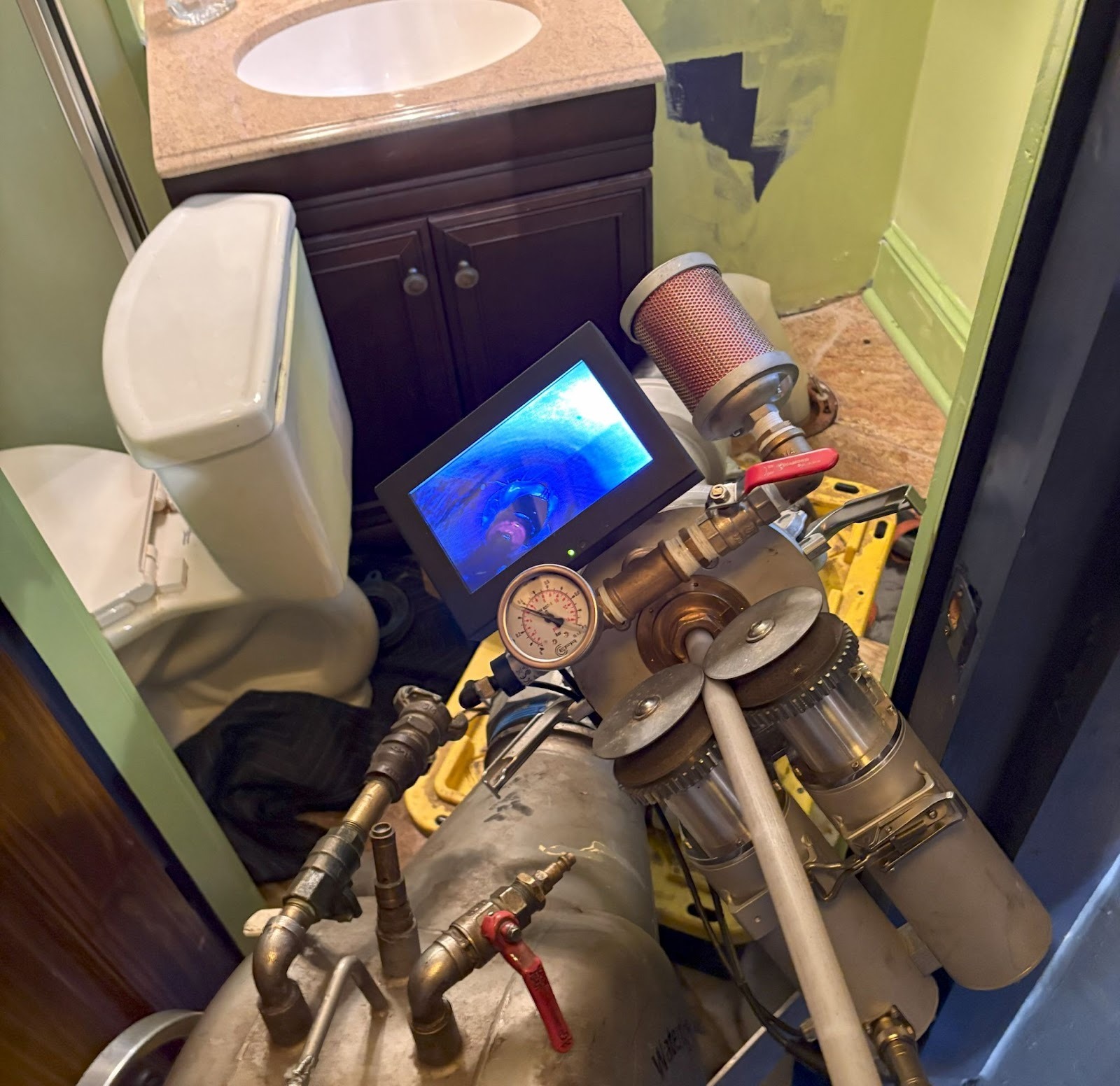
If you are noticing signs of a broken sewer line, the right move is to schedule a sewer camera inspection. A camera gives a technician a real-time view of the inside of your sewer line, pinpointing exactly where the damage is, how extensive it is, and what is causing it. That information determines what repair is actually needed, and in many cases, the answer is a trenchless sewer repair rather than excavation.
Sewer line damage is not just a plumbing inconvenience. Properly maintained sewer infrastructure plays a critical role in protecting both homes and the surrounding environment. Addressing the problem early keeps wastewater contained and out of the soil around your home, and it almost always costs significantly less than waiting until the situation becomes an emergency.
How TID Trenchless Diagnoses and Repairs Broken Sewer Lines in SE Massachusetts
At TID Trenchless, every job starts with a professional sewer camera inspection so you can see the condition of your pipe before any work begins. No guesswork, no recommending a repair you do not need. If the inspection reveals a cracked, corroded, or root-damaged pipe that still has structural integrity, sewer pipe lining is often the most effective solution, creating a seamless new pipe inside the old one with no digging required. For pipes that have collapsed or deteriorated beyond lining, we offer trenchless repair options including pipe bursting and full sewer line replacement.
We are veteran-owned, fully licensed and insured in Massachusetts, and have over 20 years of combined experience in the wastewater and trenchless repair industry. We serve homeowners and commercial customers from Taunton to Plymouth to Quincy and everywhere in between.
Frequently Asked Questions
How do I know if my sewer line is broken or just clogged?
The most reliable way to tell is whether the problem affects a single fixture or multiple fixtures at once. A single slow drain or clog is almost always localized to that fixture. When you have slow drains, gurgling sounds, or backups happening across multiple fixtures at the same time, the main sewer line is likely the source. A sewer camera inspection is the only way to confirm whether you are dealing with a structural break or a blockage.
Can a broken sewer line fix itself?
No. Sewer line damage does not resolve on its own. Cracks widen over time, root intrusions grow, and corroded sections continue to deteriorate. Waiting to address known signs of a broken sewer line almost always results in more extensive damage and a higher repair cost. Early detection is significantly less expensive than emergency replacement.
How much does sewer line repair cost in Massachusetts?
Sewer line repair costs in Massachusetts depend on the location, length, and severity of the damage, as well as the repair method used. Trenchless options like sewer pipe lining are often more cost-effective than traditional excavation because they eliminate the expense of digging up and restoring your yard. TID Trenchless provides free estimates on every project so you know exactly what to expect before any work begins.
Is trenchless repair an option for a broken sewer line?
In many cases, yes. If the pipe is cracked, corroded, or damaged by root intrusion but still has structural integrity, trenchless sewer pipe lining can restore it without excavation. Pipes that have fully collapsed may require pipe bursting or full replacement.
How long does a sewer camera inspection take?
Most residential sewer camera inspections take between 30 minutes and one hour. For longer lines or more complex systems it may take slightly longer. At TID Trenchless, we walk you through what the camera finds in real time so you understand the condition of your pipe and your options before we leave.
Ready to Get Answers? Call TID Trenchless Today
A broken sewer line does not get better on its own, and the longer it goes unaddressed, the more it costs to fix. If you are seeing any of the signs listed above, the next step is a professional sewer camera inspection. Call TID Trenchless at (508) 813-3075 or schedule an inspection online. We will show you exactly what is going on before any work begins.