
Quick Answer: A clogged foundation drain is most likely when water starts pooling near the foundation, basement dampness becomes persistent, and puddles appear after rain because the footing drain can’t move water to the foundation drain outlet. Early clues include new water stains, standing water, and basement seepage that worsens after a heavy rain event or snowmelt. The fastest confirmation is checking discharge points (outlet, catch basin, downspouts) for flow, then looking for blockage signs like packed mud, grit / sediment, or leaves and debris. Fixing surface loading first (gutters, grading) can reduce pressure immediately, but persistent seepage often means the drain line is restricted. Spotting it early prevents hydrostatic pressure buildup that can push moisture through slab edges and cracks.
First, Understand What a Foundation Drainage System Does
A clogged foundation drain causes trouble because foundation drainage is meant to intercept groundwater and move it away before it loads the wall and slab. Most homes rely on a footing drain (often called a basement footing drain) that runs around the foundation and connects to a drainage pipe leading to a discharge point.
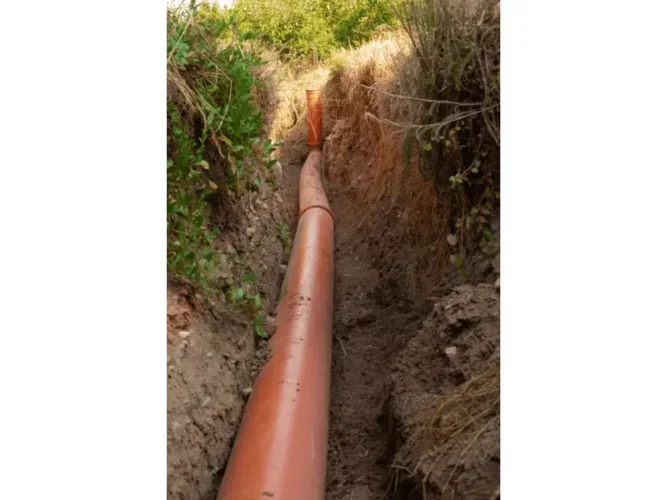
When everything works, water entering the soil is collected by a perforated pipe (sometimes part of a drain tile system) and transported away often through a foundation drain outlet or to a catch basin.
Tip: If you can’t identify where your footing drain discharges, you can’t verify whether it’s working so mapping your system is step one.
Why a Clogged Foundation Drain Overflows (The Simple Mechanics)
A clogged foundation drain overflows when water has nowhere to go. During soil saturation (after sustained rain or thaw), the drain line should act like a relief route. If the outlet is blocked or the pipe is compromised, water backs up and pressure rises.
That pressure often shows up as:
- water seepage at wall-floor seams
- water intrusion through cracks or porous concrete
- puddles forming from below-grade moisture movement
A common trigger is a sudden water table rise and if you’ve dealt with a high water table basement before, you already know how quickly seepage can turn into a flooded slab.
The 9 Early Warning Signs of a Clogged Foundation Drain
A clogged foundation drain almost always gives subtle warnings before it becomes a flooded basement.
- Persistent dampness that never fully dries out
- Puddles after rain in the same basement areas
- Standing water near walls or low spots
- Brown/yellow water stains or discoloration
- Efflorescence (white, powdery residue) on walls
- Musty odors and increased humidity (mold-prone conditions)
- A wet yard or pooling near the foundation after storms
- Overflowing gutters or downspouts dumping too close
- Water shows up after spring storms or snow runoff / snowmelt
Quick Fix: If gutters are overflowing, clean them and ensure downspouts discharge far enough away before assuming the underground drain failed.
Where Clogs Usually Form (So You Check the Right Spots)
A clogged foundation drain typically happens in one of three places:
1) The Outlet or Discharge Point
A blocked foundation drain outlet is the easiest and cheapest problem to catch early. If flow is weak or non-existent during wet weather, suspect blockage.
2) The Line Between the Footing Drain and Outlet
Competitors repeatedly show these blockages are often far from the outlet, commonly made of packed mud, grit / sediment, and fine debris.
3) A Transition or Material Failure
Older homes sometimes have outdated drain materials. A deteriorating section, like Orangeburg fiber pipe, can collapse, leading to outlet collapse and a deteriorating pipe section that traps debris.
Symptom → Likely Cause → What to Check First
| Symptom You Notice | Most Likely Cause | Check First |
| Water appears after storms | Drain line can’t relieve soil water | Outlet flow + catch basin |
| Persistent dampness | Slow backup in footing drain | Downspouts + grading |
| Efflorescence on walls | Ongoing moisture evaporation | Wall base + slab edges |
| Standing water in one corner | Low-point collection + blocked exit | Outlet + pipe slope |
| Basement flooding in spring | snowmelt + saturated soil | Discharge path + debris traps |
Step-by-Step Home Test to Confirm a Clogged Foundation Drain
A clogged foundation drain can be verified without special equipment if you test smartly and safely.
Safety First (Do this Before Digging)
Before any digging near a foundation, confirm utility lines / Call 811 location. Hitting a buried gas or electric line is a serious hazard.
Quick Diagnostic Sequence
- Run water from a hose into the suspected drain intake area (only if accessible and safe).
- Check the discharge point for flow within minutes.
- Open the catch basin lid (if present) and look for debris buildup.
- Inspect downspouts for clogs and confirm discharge direction.
- Watch for immediate basement response: seepage, damp lines, or puddling.
- If no flow is seen at discharge during wet conditions, suspect blockage.
Tip: Do this during or right after rain for the most reliable result.
The Overflow Timeline (How a Clog Turns Into a Flooded Basement)
A clogged foundation drain tends to follow a predictable escalation:
- Minor dampness → recurring seepage → puddles → visible flooding
The jump from seepage to flooding often happens after a heavy rain event or major storm, like a tropical storm (Irene)-type scenario, when the ground becomes fully saturated and water keeps recharging the soil faster than it can drain.
This is why the first-time flood often surprises homeowners: the clog may have been building for years.
Quick Fixes That Reduce Water Load Immediately
A clogged foundation drain is harder to manage when surface water is being dumped near the foundation. You can often reduce symptoms quickly by controlling inputs.
Quick Fix Checklist (Not a Full Solution)
- Extend downspouts away from the house
- Redirect roof runoff away from the foundation
- Clean gutters to stop overflow and wall splatter
- Fix grading so water runs away, not toward the house
- Clear visible debris near any drain openings
Your next deeper strategy should consider whether you need a system comparison like french drains vs curtain drains based on where the water is coming from (surface vs subsurface).
Common Installation Mistakes That Cause Clogs
Many mystery clogs are really design issues that trap debris.
Mistakes that Repeatedly Show Up
- Drain installed too close to the foundation without proper discharge
- Poor or inconsistent pipe slope downhill (flat spots hold sediment)
- Using corrugated pipe where snaking is difficult
- Using the wrong stone: base stone (stone dust) can migrate into pipe openings
- Not using clear stone (washed stone) around the drain line
- Pipe holes oriented incorrectly (reduces effective collection + increases clogging risk)
Tip: A drain line can be installed new and still fail if slope and filtration media are wrong.
Drain Stone, Filtration, and Why Mud Wins Over Time
A clogged foundation drain is often a filtration failure. Fine particles wash into the system and accumulate where water slows down especially near turns, low spots, or transitions.
The best-performing installs separate debris-heavy surface water from cleaner subsurface drainage. For example, roof and driveway water carries leaves and debris plus grit / sediment, while subsurface water filtered through stone tends to be cleaner.
If you want your footing drain to last, remember: french drain can protect property from water damage only when the stone, fabric (if used), and discharge strategy prevent silting.
Foundation Drain Cleanout vs Main Line Clean Out
Foundation Drain Cleanout vs Main Line Clean Out: A cleanout for footing drains helps access foundation drainage, while a main line cleanout serves household wastewater lines mixing them up leads to wrong diagnoses.
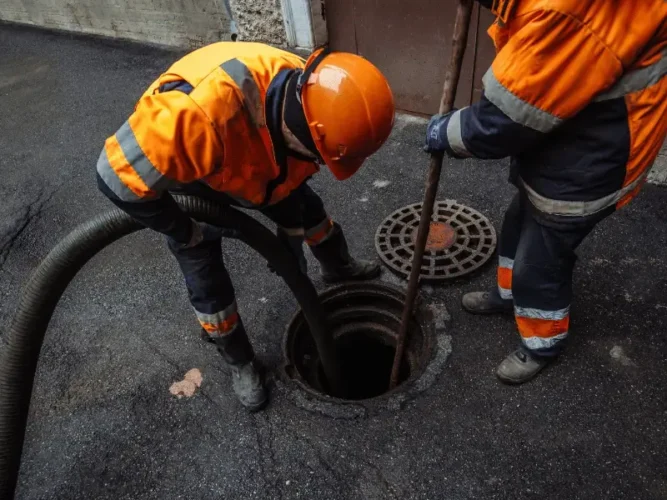
Under this heading, it’s smart to consult the best sewer line technician when symptoms could involve both drainage and sewer behaviour (like backups or gurgling). Many homeowners chase a drainage clog when the real issue is a main sewer restriction or vice versa.
Also note: some systems have a dedicated foundation drain cleanout, but many do not, which is why catch basins and outlets become critical inspection points.
Slab Homes and Drain Clog in Slab Foundation Symptoms
A clogged foundation drain can still affect slab homes, but the symptoms may present differently.
The phrase drain clog in slab foundation often gets used when water appears at slab edges, interior corners, or where the slab meets walls. This can be drainage-related, but it can also indicate grading, downspout discharge, or subsurface water pressure.
If your slab shows repeated wetness after rain, don’t assume plumbing first confirm exterior drainage and any connected drain tile or perimeter collection system.
Basement Footing Drain vs Drain Tile System (Clear Definitions)
A basement footing drain is the perimeter drainage line intended to intercept water at the footing level. A drain tile system is the broader setup that may include interior lines, exterior lines, or both, often referred to collectively as a drain tile system or drain tile system components.
When people say foundation drain tile clogged, they usually mean one of two situations:
- the perimeter collection line is restricted
- the discharge path is blocked or collapsed
The phrase clogged foundation drain tile is also commonly used when older systems have sediment buildup or material failures at the outlet.
How to Confirm Foundation Drain Tile Clogged Without Excavation
Foundation drain tile clogged problems can often be narrowed down by isolating surface water from subsurface water.
Isolation Test (Simple, Effective)
- Extend downspouts and redirect roof water away for 48-72 hours.
- Recheck basement dampness during the next rain.
- If seepage still occurs, suspect subsurface saturation and drain restriction.
- Inspect the outlet and catch basin for sediment accumulation.
- If flow is weak at discharge during wet conditions, suspect blockage.
If your system uses a trench drain (channel drain) for driveway water, ensure it’s not tied into the footing drain line without a debris-trap strategy surface water carries leaves and grit that accelerate clogs.
Ongoing Drain Failures That Happen Outside Normal Hours
Repeated drainage failures during overnight storms or weekends often point to a footing drain that can no longer handle peak water loads.
Many foundation drain overflows happen outside standard business hours during heavy overnight rain, spring thaw, or back-to-back storms. When the issue repeats during these windows, it’s usually because the system cannot discharge fast enough once soil saturation peaks.
In these scenarios, a 24/7 french drain technician can help identify whether the problem is a clogged outlet, collapsed section, or improper separation between surface and subsurface drainage before the next storm triggers another overflow.
Quick insight: Drainage failures that only appear during extreme weather are often dismissed too long, even though they’re the most accurate indicator of system capacity problems.
Materials That Predict Clogs: Orangeburg, PVC, and Couplings
Some drain lines clog because they’re failing structurally.
Orangeburg Fibber Pipe
Orangeburg fibber pipe is known to deteriorate and deform over time. A partial collapse becomes a debris shelf, causing chronic clogging.
PVC Pipe and Fittings
A common reinforcement method is inserting PVC pipe into a compromised line, then joining transitions with a Fernco fitting / coupling. This is useful when the old line is partially intact, but it doesn’t replace proper grading and discharge design.
This also matters because smooth pipe resists buildup better than rough interiors-one reason smooth PVC pipe often performs better than corrugated options in clog-prone environments.
Yard and Driveway Clues: Surface Water That Feeds Foundation Problems
If your driveway slopes toward the home, runoff can recharge soil at the foundation edge and overwhelm the drain system. Driveway channelling is why many homes add a separate trench drain (channel drain) tied to an appropriate discharge line.
When surface water is controlled and separated from subsurface drainage, clogs slow down and maintenance is easier especially if debris collects in a serviceable basin rather than in a buried pipe.
What to Inspect, What You’re Looking For, What It Means
| Inspection Point | What to Look for | What It Usually Means |
| Outlet discharge | Weak/no flow in wet weather | Blocked outlet or restricted line |
| Catch basin | Sediment, leaves, standing water | Debris is not being trapped/cleared |
| Downspout termination | Dumping near foundation | Soil saturation + drain overload |
| Drain line material | Deformed/soft sections | Aging line, possible collapse |
| Pipe path | Flat/low sections | Poor slope, sediment accumulation |
| Basement wall base | Efflorescence + stains | Chronic seepage from pressure |
When Water Is Actively Rising, Act Immediately
If water is entering the basement faster than it can drain or dry, the situation has moved beyond observation and requires immediate intervention.
Active water intrusion during storms can indicate a fully blocked discharge path or a collapsed section of the drainage line. In these cases, delaying action increases the risk of electrical damage, appliance failure, and structural stress from prolonged saturation.
If water is spreading across the floor, contacting an emergency plumbing company is appropriate to stabilize conditions, rule out combined sewer involvement, and stop active overflow before secondary damage occurs.
Tip: Emergency response is about stopping the water first diagnosis and permanent correction come next.
Stop Drain Overflows Before They Flood Your Basement
If your clogged foundation drain signs are stacking up dampness, stains, weak discharge, and recurring puddles don’t wait for an overflow to force emergency cleanup. TID Trenchless can help identify the blockage location, restore drainage flow, and prevent repeat basement water damage. Call TID Trenchless: 7818873937
FAQs About Clogged Foundation Drain
How do I know if I have a clogged foundation drain?
A clogged foundation drain is likely if you see persistent dampness, puddles after rain, weak outlet discharge, or repeated seepage that returns quickly after drying.
What’s the fastest place to check before digging?
Check the foundation drain outlet, any catch basin, and downspout discharge points for flow and debris.
Can a clogged foundation drain cause cracks?
Yes. By increasing soil moisture and pressure, drainage failure can contribute to hydrostatic pressure and cracking.
Does a clogged foundation drain always require excavation?
Not always. Many cases are outlet blockages or debris issues that can be cleared without digging the full perimeter.
Why does it get worse in spring?
Spring combines saturated soil, snowmelt, and heavy rain patterns that overwhelm restricted drain lines faster.