
TL;DR
- Most sewer problems in older homes start with the original pipe: clay that lets tree roots in at the joints, cast iron that rusts from the inside, or Orangeburg (a fiber pipe used after World War II) that softens and loses its shape.
- The year your house was built is the best first clue to which of these pipes you have.
- In Boston, Cambridge, and Quincy, the homeowner is responsible for the sewer line all the way to the main in the street.
- A sewer camera inspection confirms the pipe and its condition. Many old lines can be relined from the inside without digging, but a collapsed pipe usually needs to be replaced.
Massachusetts has some of the oldest housing in the country. In Boston, half of all homes were built before 1940. That history is part of what makes these houses worth owning, and it is also why sewer problems in older homes come up so often here. In many of them, the pipe carrying wastewater out to the street is the same one that went in when the house was built.
The first hint is usually small. A drain cleaning crew clears the main line and mentions roots on the way out. A home inspector notes that nobody checked the sewer line. A house down the street has an excavator parked in the front yard for a week. None of that tells you what is under your own yard, how much life it has left, or who pays when it fails.
This guide is for owners of older homes on city sewer in Greater Boston and Southeastern Massachusetts. It starts where TID Trenchless starts on every job, with what is actually inside the pipe. From there, it works through what goes wrong with old lines, what falls on you as the owner, and which repairs make sense.
What Kind of Sewer Pipe Does Your Older Home Have?
The year your house was built is the best first clue. Homes built before the 1970s usually had their sewer lines laid in clay, cast iron, or, after World War II, a fiber pipe called Orangeburg. PVC plastic became the standard in the years that followed. If your home is older than that and the line has never been replaced, what runs under your yard is likely one of these three materials.
Here is how the three most common old sewer pipes compare.
| Pipe material | Common in homes built | Typical lifespan | What usually goes wrong |
|---|---|---|---|
| Clay | Before the 1970s | 50 to 60 years | Roots get in at the joints; sections crack or shift out of line |
| Cast iron | Early 1900s through the 1970s | 50 to 75 years | Rusts from the inside, builds up scale, and wears thin along the bottom |
| Orangeburg | About 1945 to the early 1970s | About 50 years, often failing sooner | Absorbs water, blisters, flattens, and can collapse |
Those lifespans are averages, not deadlines. Plenty of old lines keep working past them, and some fail well before, depending on the soil, nearby trees, and how carefully the pipe was laid. The age of your home tells you what to look for. Only a camera can tell you what shape the pipe is actually in.
Clay Pipe: Strong Walls, Weak Joints
Clay pipe, sometimes called terra cotta, does not rust or rot. The weak spots are the joints. Clay was laid in short sections fitted end to end, and tree roots find the small gaps between them, follow the moisture inside, and grow into a mass that catches everything flowing past. Decades of ground movement can also crack a section or push a joint out of line, leaving a ledge where waste snags. If a drain cleaning crew keeps pulling roots out of your line, they are usually getting in through clay joints, which is covered in more detail in how tree roots get into sewer lines.
Cast Iron Pipe: Wearing Out From the Inside
Cast iron looks solid from the outside, which is part of the problem. Over the years, the inside rusts and builds up rough scale that narrows the pipe and catches paper and grease. The bottom of the pipe, where wastewater runs every day, wears thinnest and can eventually split open along its length, a failure called channeling. Repeat clogs in a home with original cast iron often trace back to that buildup, not a simple blockage. For the full picture, see why cast iron pipes fail over time.
Orangeburg Pipe: The Post-War Shortcut
Orangeburg pipe was made from wood fiber bonded with coal tar pitch. It was cheap and easy to install when metal was in short supply after World War II, and some homes got it until the early 1970s. Over time it soaks up water, softens, and blisters on the inside. Under the weight of the soil above, it can squeeze into an oval and eventually collapse. A home from that era with a sewer line nobody has ever looked at is worth a closer look, even if the drains seem fine today.
One Line Can Be More Than One Pipe
Many older sewer lines are a patchwork. It is common to find cast iron running out through the foundation, then clay or Orangeburg under the yard, with a short stretch of PVC where someone made a repair years ago. Each material wears out differently, so a fix that suits one section may not suit the next. That is the best reason to see the full length of the line on camera before choosing any repair, starting with a sewer camera inspection.
Who Is Responsible for the Sewer Line in Massachusetts?
In Boston, Cambridge, and Quincy, the homeowner is. The pipe that runs from your house to the city sewer main is called the sewer lateral. In all three cities, the owner is responsible for it from inside the basement to the main in the street. That means the whole run, not just the part under your lawn. A crack near the street is still your repair.
This surprises a lot of owners, and it matters more now than it used to. A leaking lateral lets groundwater seep into the sewer system. Massachusetts requires sewer authorities to have a plan to cut down on that extra flow. In Boston, owners with a leaking lateral get a letter from the Boston Water and Sewer Commission (BWSC).
Boston homeowners may also qualify for help with the cost. BWSC offers a Sewer Lateral Financial Assistance Program for laterals that are blocked, collapsed, or leaking. If BWSC confirms the problem and approves the property, the owner can get a one-time grant of up to $8,000, depending on the repair. Approval comes first, so contact BWSC before you schedule any work.
Each property can only get that grant once every 10 years, which is why BWSC encourages approved owners to replace or reline the whole lateral instead of patching one spot. That advice holds even without a grant. Patching one section of an old line often just moves the next failure a few feet down the pipe.
Outside these three cities, call your town’s public works or sewer department. They can tell you where your responsibility ends. Ask before any work starts, because some cities control who can work at the street. Cambridge, for example, requires a bonded drain layer, which is a contractor the city has approved for this work.
What a Camera Inspection Shows in an Old Sewer Line
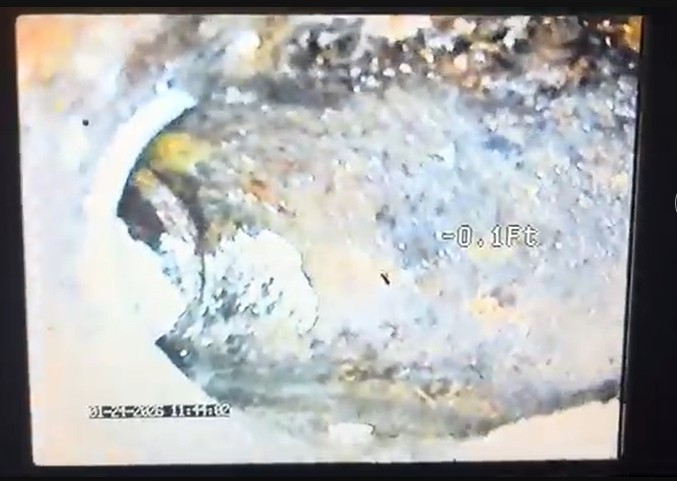
A sewer camera inspection sends a small waterproof camera through the line while a technician watches the video live. In an older home, the footage shows exactly where the pipe changes from one material to another. It also shows how much scale has built up in cast iron, whether clay joints have shifted, and whether any Orangeburg has started to flatten.
Those details decide the repair. A round pipe with roots at a few joints is a very different job from a line that has collapsed under the yard. For a closer look at why this step matters, read about getting a sewer inspection before any repair.
Trenchless Sewer Repair Options for Older Homes
Many old sewer lines can be repaired without digging a trench across the yard. Trenchless sewer repair is the umbrella term for no-dig methods that fix a pipe through one or two small access points. For an older home, the right method comes down to one question: is the old pipe still holding its shape? The camera answers that, and the answer points to one of the options below.
Can an Old Sewer Line Be Relined?
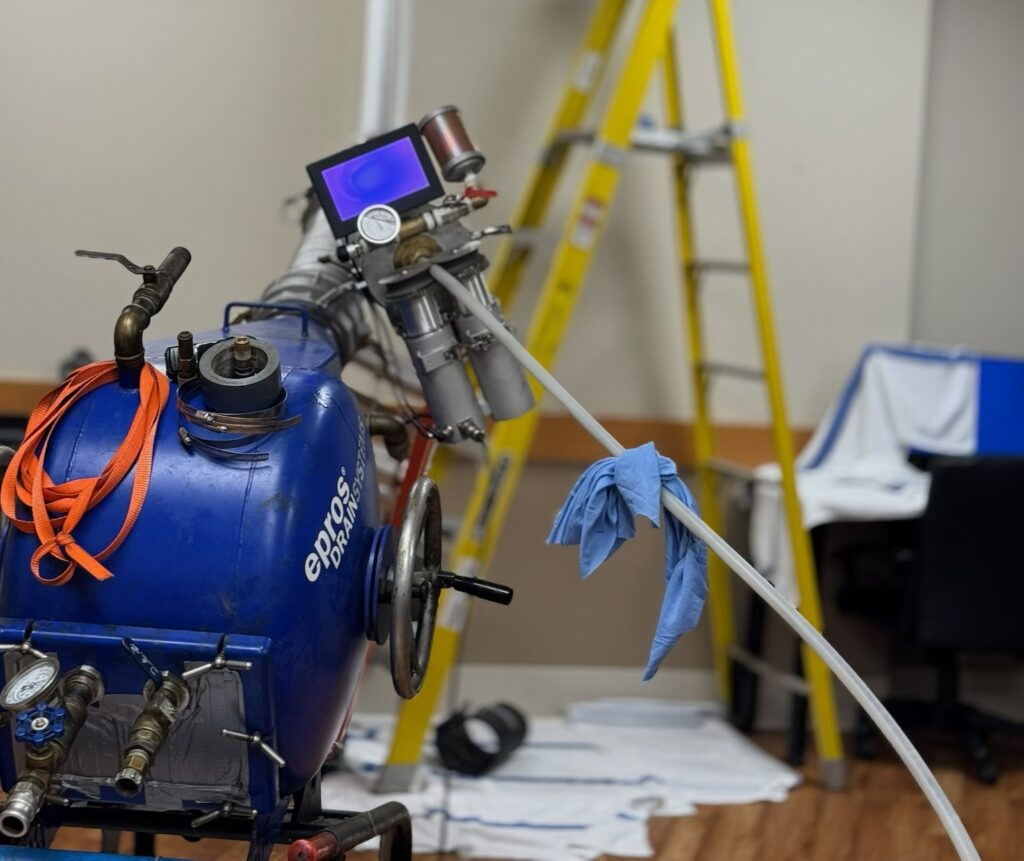
Yes, as long as the pipe is still mostly round and in one piece. Sewer pipe lining, also called CIPP (cured-in-place pipe), places a resin-soaked liner inside the old pipe and hardens it into a new pipe within the old one. It works well on clay lines with roots at the joints and on cast iron that is scaled but still solid. The line gets cleaned first, often with hydro jetting or cast iron descaling, so the liner bonds to a clean surface. Because the finished liner has no joints, roots have no gaps left to grow through.
When Does an Old Sewer Line Need to Be Replaced?
An old sewer line usually needs to be replaced when the pipe has collapsed, broken apart, or sagged badly. A liner takes the shape of the pipe it goes into, so it cannot round out a flattened pipe or lift a low spot where water pools. Orangeburg that has squeezed into an oval is the most common example, along with clay sections that have shifted apart. In many of these cases, pipe bursting can pull a new pipe through the path of the old one while breaking the old pipe apart, still without a full trench. When the damage rules that out, the failed section is dug up and replaced through sewer line repair and replacement.
What Affects the Cost of Repairing an Old Sewer Line?
The cost depends on how long the line is, how deep it runs, what it is made of, how badly it is damaged, and how many bends and connections it has. Access matters too. A cleanout in the basement makes a no-dig repair simpler, while a line running under a driveway or out to a city main can add steps and permits. Because most of these factors stay hidden until the camera goes in, an honest price comes after the inspection, not before. TID Trenchless gives free estimates based on what the footage actually shows.
Buying an Older Home? Have the Sewer Line Scoped First
A standard home inspection does not usually include a camera inspection of the sewer line. Inspectors check what they can see, and the sewer line runs underground. Once you close, that line and every repair it needs become yours, and in Boston, Cambridge, and Quincy that responsibility runs all the way to the street. A camera inspection during your inspection period gives you time to price a repair, negotiate, or ask the seller to fix it before the sale.
If the home has been sitting empty, there is one more reason to check. In Boston, BWSC requires a video inspection of the sewer lateral before water service is restored to a building that has been shut off for more than a year. For more on what to expect, see what a sewer inspection before buying a home covers.
What If Your Home Is on Septic?
Most of this guide applies to homes on city sewer. On Cape Cod, more than 85 percent of homes use septic systems instead. Those systems fall under the state’s Title 5 rules, which require an inspection within two years before a home is sold. If your home is on septic, your town’s board of health can tell you what applies to your property.
Sewer Problems in Older Homes: Common Questions
How do I know if my old sewer line is failing?
The most common signs are slow drains in more than one fixture, gurgling toilets, sewage smells, and backups in a basement floor drain. In an older home, clogs that return a few weeks after a cleaning are another strong clue. Any of these is a good reason to have the line checked on camera. For the full list, see these 7 warning signs your sewer line may be broken.
Can I keep having roots cleaned out of an old clay sewer line?
You can, but it treats the symptom, not the cause. Cleaning cuts the roots back, but the gaps in the clay joints stay open. The roots usually grow back, and the joints keep loosening over time. If your line needs root cleaning every year or two, compare that ongoing cost with a repair that seals the joints for good, such as sewer pipe lining.
Does homeowners insurance cover an old sewer line?
Usually not when the damage comes from age. Most standard homeowners policies leave out normal wear, aging pipe, and tree root damage, which covers most old-line failures. Some insurers sell an add-on called service line coverage for the pipe between the house and the street. Check your policy or ask your agent now, since coverage is different with every insurer.
How long does it take to repair an old sewer line without digging?
Most trenchless repairs are finished in a single day. The exact timeline depends on the length of the line, its condition, and the method it needs. A line that needs heavy cleaning or descaling before lining can take longer. A line that has to be dug up and replaced usually takes several days, plus time to restore the yard.
Know What Is Under Your Yard Before It Fails
An older sewer line does not fail on a schedule. The age of your house only tells you where to start. What decides the repair is what the pipe is made of, what shape it is in, and how much of the line is yours. Once you know those three things, the right fix is usually clear.
TID Trenchless was started by John Shaw, a Marine veteran. He spent more than 13 years working on wastewater systems and trained other contractors on trenchless methods before he opened the company. If you own an older home in Greater Boston or Southeastern Massachusetts, schedule a sewer camera inspection with TID Trenchless and see what is really under your yard.