
TL;DR
Most sewer line damage, including cracks, root intrusion, rusted cast iron, and sagging sections, stays hidden underground until it causes a backup.
A sewer camera inspection sends a waterproof camera through the line to show exactly what the problem is, where it sits, and how deep it is, with no digging.
Knowing that first means you pay for the repair your pipe actually needs instead of guessing.
Your toilet gurgles when the washing machine drains. A faint sewer smell drifts up in the basement, fades, and comes back a week later. A drain gets cleared, works fine for a month, then slows down again. None of these feel like an emergency, but each one can be a sign of damage inside the sewer line that you cannot see from the house or the yard.
That is what makes sewer problems so frustrating. The damage happens underground, out of sight, and it usually gets worse slowly. In many Southeastern Massachusetts homes, the sewer line under the yard is still the original cast iron or clay pipe, and it may never have been checked. Most homeowners replace a roof or a water heater at some point, but the pipe carrying every drop of wastewater out of the house tends to get attention only after it backs up.
Sewer camera inspections are how hidden pipe damage gets found before it turns into a backup or a dug-up yard. This guide walks through what happens during an inspection, the problems a camera can find, how each finding points to a different repair, and why the person reading the footage matters as much as the camera itself.
What Is a Sewer Camera Inspection?
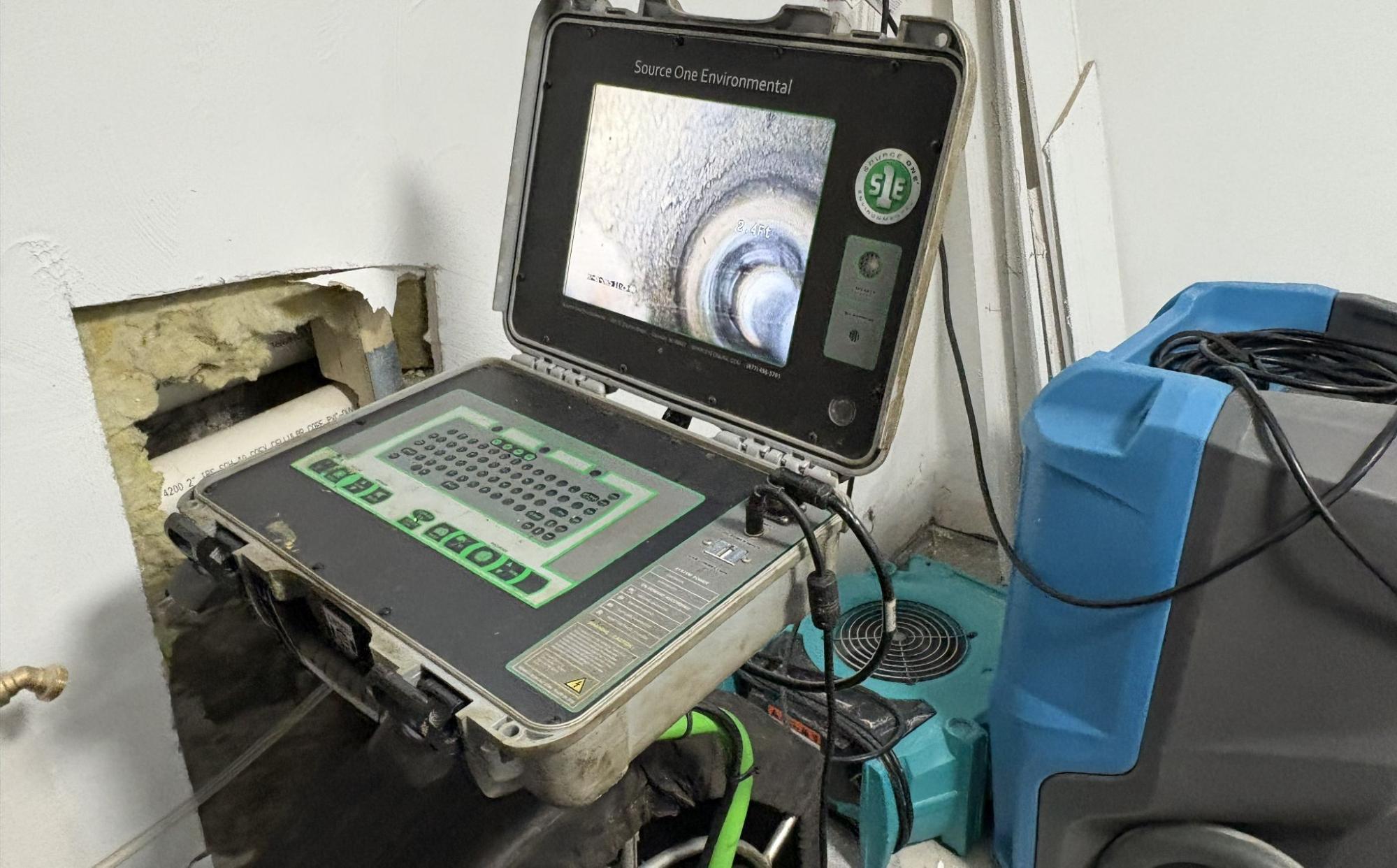
A sewer camera inspection is a no-dig way to see inside your main sewer line, the pipe that carries wastewater from your home to the city sewer or a septic system. A small waterproof video camera on a flexible cable is fed slowly through the line while a technician watches the live picture on a screen. The video shows what the pipe is made of, the condition of the pipe walls, and the exact spot where any blockage or damage sits.
For a home’s sewer line, the standard tool is a push camera. The camera head is self-leveling, so the picture stays right side up as it moves through bends, and bright LED lights let it see inside a dark pipe. Right behind the camera sits a small transmitter called a sonde, which sends out a signal a technician can track from above ground. Larger city sewer mains are usually inspected with a crawler, which is a camera on wheels, but a home’s sewer line is a job for a push camera.
How Does a Sewer Camera Inspection Work?
The process is simple, but reading what the camera shows takes experience. Most home inspections take about 30 minutes to an hour. It can run longer if the line is long, there is no easy access point, or a clog has to be cleared first. Here is what happens, step by step.
Step 1: Find an Access Point
The technician starts by finding a cleanout, which is a capped pipe that opens straight into your sewer line. Cleanouts are usually in the basement floor, along a foundation wall, or in the yard near the house. If a home does not have one, the camera can often go in through a toilet drain after the toilet is pulled.
Step 2: Feed the Camera Into the Line
The camera is pushed slowly through the pipe on its flexible cable, moving from the house toward the street or septic tank. If standing water or a heavy clog blocks the view, the line may need to be cleaned first so the camera can get a clear look at the pipe walls.
Step 3: Watch the Live Video
The camera sends a live video feed to a monitor as it moves, showing each joint, crack, root, or low spot it passes. An on-screen counter tracks how far the camera has traveled, so every problem is tied to an exact distance from the access point.
Step 4: Locate and Mark the Problem
When the camera finds damage, the technician stops it there and uses a handheld locator above ground to pick up the sonde’s signal. That pinpoints the spot on the surface and shows how deep the pipe is buried, so any repair targets one exact location instead of a guess.
Step 5: Review the Findings and Your Options
Once the inspection is done, the technician walks you through the footage and explains what it shows in plain terms: what the problem is, how serious it is, and which repairs make sense. You see what is actually in your pipe, not a guess and not a sales pitch.
Common Hidden Pipe Damage a Sewer Camera Can Find
Most sewer problems look the same from inside the house: slow drains, gurgling, or a backup. On camera, they look very different, and that difference decides the fix. Here is what the most common types of hidden pipe damage look like on the screen.
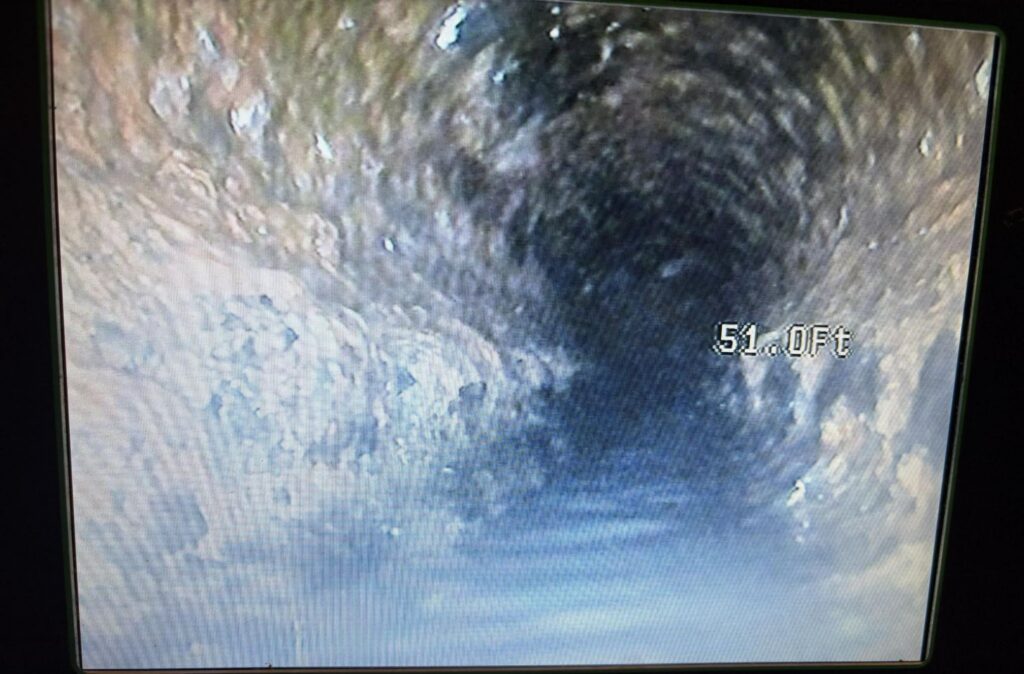
- Root intrusion: Thin, hair-like strands or thick mats of roots poking through a joint or crack. Roots are drawn to moisture leaking from the pipe, and once inside they catch paper and debris that slow the flow.
- Cracks and fractures: Dark lines or open splits in the pipe wall, sometimes with soil showing behind them. These are common in the older cast iron and clay lines found throughout Southeastern Massachusetts.
- Rust and scale in cast iron: Rough, bumpy, orange-brown buildup coating the inside of the pipe. Sewer gas mixes with moisture and forms a mild acid that slowly eats away at the iron, and the scale it leaves behind narrows the pipe and snags waste.
- Grease and debris buildup: A coating of grease, sludge, or wipes stuck to the pipe walls. This often shows up in a pipe that is still structurally sound.
- Bellied (sagging) pipe: The camera dips into standing water that never drains. A section of pipe has sunk below the correct slope, so waste settles there instead of flowing out.
- Offset joints: A visible lip or step where two pipe sections no longer line up. This usually happens when the soil settles, roots push on a joint, or the pipe was never laid on a firm base.
- Collapsed or crushed sections: The pipe loses its round shape, or the camera cannot get past a pile of soil and broken pipe. Older Orangeburg pipe, made from tar-soaked wood fiber, is especially prone to flattening this way.
Not every finding means a repair. Grease and sludge in a sound pipe can usually be cleared with hydro jetting, while cracks, offsets, and collapses point toward a fix in the pipe itself. The camera tells you which situation you are in before any money is spent.
What Are the Benefits of a Sewer Camera Inspection?
A sewer camera inspection gives you an accurate diagnosis, helps you avoid paying for the wrong repair, finds the problem without digging, and leaves you with a video record of your pipe’s condition. Each of these benefits comes from the same thing: seeing the inside of the pipe before deciding what to do.
An Accurate Diagnosis Instead of a Guess
A sewer camera inspection shows the actual problem inside the pipe, so the repair matches what is really there instead of what the symptoms suggest. It also catches damage early. A hairline crack or the first few roots at a joint are far easier to deal with than the backup or collapse they can turn into when no one looks.
Lower Repair Costs Over Time
Finding the real cause first is usually the cheapest path, because you pay to fix the problem once instead of treating symptoms over and over. If roots are coming through a cracked joint, clearing the line every few months only buys time while the crack gets worse. Catching damage early can also keep a small spot repair from growing into an emergency call or a full sewer line replacement.
No Digging to Find the Problem
Because the camera goes in through an existing cleanout or drain, nothing gets dug up just to figure out what is wrong. With the damage already pinpointed, any repair can target one exact spot. Many problems can then be fixed with trenchless sewer repair, which fixes the pipe with little or no digging instead of a long trench across your lawn, driveway, or landscaping.
A Video Record of Your Pipe’s Condition
A sewer camera inspection can be recorded, giving you video proof of what is inside your sewer line and exactly where. That record helps when you are comparing repair options or getting a second opinion. It can also help when buying an older home or selling one, and it may support an insurance claim, though whether a claim is paid depends on your policy.
What Happens After a Sewer Camera Finds Damage?
What happens next depends on what the camera finds. Some problems only need cleaning, many can be fixed with a trenchless method, and a few need digging at one targeted spot. The two trenchless methods below work differently. Sewer pipe lining, also called CIPP (cured-in-place pipe), places a resin-soaked liner inside the old pipe and hardens it into a new pipe within the old one. Pipe bursting pulls a new pipe through the path of the old one, breaking the old pipe apart as it goes.
| What a Sewer Camera Finds | What It Usually Means | Typical Next Step |
|---|---|---|
| Grease, sludge, or debris buildup. | The pipe is still structurally sound. | Drain cleaning or hydro jetting |
| Tree root intrusion | Roots are getting in through a crack or joint. | Clear the roots, then line the pipe so they cannot grow back in |
| Cracks or corrosion | The pipe wall is weakening. | Clean and descale, then sewer pipe lining |
| Offset joint | Pipe sections have shifted out of line. | Lining for minor offsets; a spot repair for severe ones |
| Bellied (sagging) pipe | A section has sunk below the correct slope. | Monitoring and cleaning for a small belly; digging up and re-laying that section for a large one |
| Collapsed Section | The pipe has lost its shape. | Pipe bursting or replacing that section |
Lining is a strong fix, but it is not the answer to everything. A liner takes the shape of the pipe it is installed in, so it cannot straighten a sagging section or bridge a joint that has shifted too far. The right repair also depends on the pipe’s material, age, depth, and how much of the line is damaged. That is why the footage, not the symptom, should decide the plan.
How Do You Choose a Contractor for a Sewer Camera Inspection?
A sewer camera inspection is only as useful as the person reading the footage. Anyone can push a camera down a pipe, but telling a minor root problem from a failing joint, and knowing what can safely wait, takes real time spent underground. When you hire someone for an inspection, look for a contractor who:
- Shows you the footage and explains it in plain language.
- Records the inspection so you can review it later or get a second opinion.
- Tells you what can wait, not just what needs fixing now.
- Offers more than one repair method, so the recommendation fits your pipe instead of the only tool they own.
- Is licensed and insured in Massachusetts.
This is where a trenchless specialist has the edge over a general contractor. For a specialist, reading sewer footage is the whole job, not a side service.
John Shaw started TID Trenchless in 2019 after more than 13 years in wastewater infrastructure. He worked as a foreman on municipal sewer contracts, served as a project manager for a large trenchless manufacturing company, and trained contractors on trenchless systems internationally. He is also a Marine veteran, and TID is veteran-owned, licensed, and insured in Massachusetts.
That background is why every TID job starts with the camera. We record the inspection, walk you through what it shows, and lay out your options, from drain cleaning and hydro jetting to sewer pipe lining and pipe bursting. If cleaning is enough for now, that is what we will tell you.
Sewer Camera Inspection FAQs
How much does a sewer camera inspection cost in Massachusetts?
Most Greater Boston homeowners pay about $300 to $500 for a sewer camera inspection. The price can run higher if the sewer line is long, the home has no cleanout, or the pipe needs cleaning before the camera can see clearly. Compared with the cost of a repair, it is a small price for knowing exactly what you are fixing. Call TID Trenchless for a quote on your home.
When should I get a sewer camera inspection?
Schedule one any time a drain problem keeps coming back after it has been cleared, or right after a sewage backup. It is also smart to book one before buying an older home, before paving a driveway or landscaping over the sewer line, or if your main line has never been checked. Damp, unusually green patches in the yard are another reason to take a look.
How often should I get a sewer camera inspection in Massachusetts?
There is no Massachusetts rule for how often to inspect a sewer line. Many sewer pros suggest a camera inspection every 1 to 3 years for homes with older cast iron or clay pipes, large trees nearby, or a history of backups. Newer homes with PVC pipes can usually wait 5 years or longer. A first inspection gives you a baseline to compare against later.
Can a sewer camera find a leak in my sewer line?
Yes, in most cases. A sewer camera shows the cracks, separated joints, and holes that let wastewater leak out and let groundwater and roots get in. The camera cannot see the leak in the soil itself, but signs like a gap in the pipe wall, roots, or soil inside the line point straight to where it is happening.
Does homeowners insurance cover a broken sewer pipe?
Usually not. Standard homeowners policies pay for sewer pipe damage only when it is sudden and accidental, like a fire, so damage from age, rust, or tree roots is typically excluded. Many insurers in Massachusetts sell two add-ons that can help: service line coverage, which helps pay to repair the buried pipe itself, and sewer backup coverage, which helps pay for cleanup inside your home. Check your policy with your agent.
Know What Is in Your Sewer Line Before You Pay to Fix It
Hidden pipe damage rarely stays small. Roots thicken, cracks spread, and a sagging section collects more waste every year, all out of sight until something backs up. A sewer camera inspection brings that damage into view, showing what the problem is, where it sits, and whether it calls for a repair, a cleaning, or just a closer watch.
For homeowners from Cambridge to Cape Cod, that answer is worth having before anyone quotes you a repair. When you are ready for a look inside your line, schedule a sewer camera inspection with TID Trenchless. You will know exactly what you are dealing with before you commit to anything.