

Drain Cleaning for a Town Built on Septic Systems and Sandy Soil
In Plymouth, a slow drain does not always lead to the same place it would in Cambridge or Boston’s inner suburbs. Most of the town is not on municipal sewer. Town records put sewer service at roughly 3,700 accounts, concentrated in Plymouth Center and North Plymouth, which leaves most of the town on private septic even though those same homes are on town water. For a lot of homeowners here, drain cleaning in Plymouth, MA means clearing the lateral that runs out to a septic tank, and that line has limits of its own.
The ground itself plays a role too. Plymouth sits on a glacial outwash plain, so the soil across most of town is sandy and drains fast. That is part of why so much of Plymouth is on septic, since the ground percolates quickly and suits a leach field. It also means loose sand can shift around a buried line over the years, leaving a section unsupported until it settles into a low spot where waste starts to collect. Plymouth is the largest municipality in Massachusetts by area, about 134 square miles in total and roughly 96 square miles of it land, and that spread shows up in the pipes. A home near Plymouth Rock and the historic downtown may still run on cast iron, while a house in a newer development a few miles out is working with an entirely different setup.
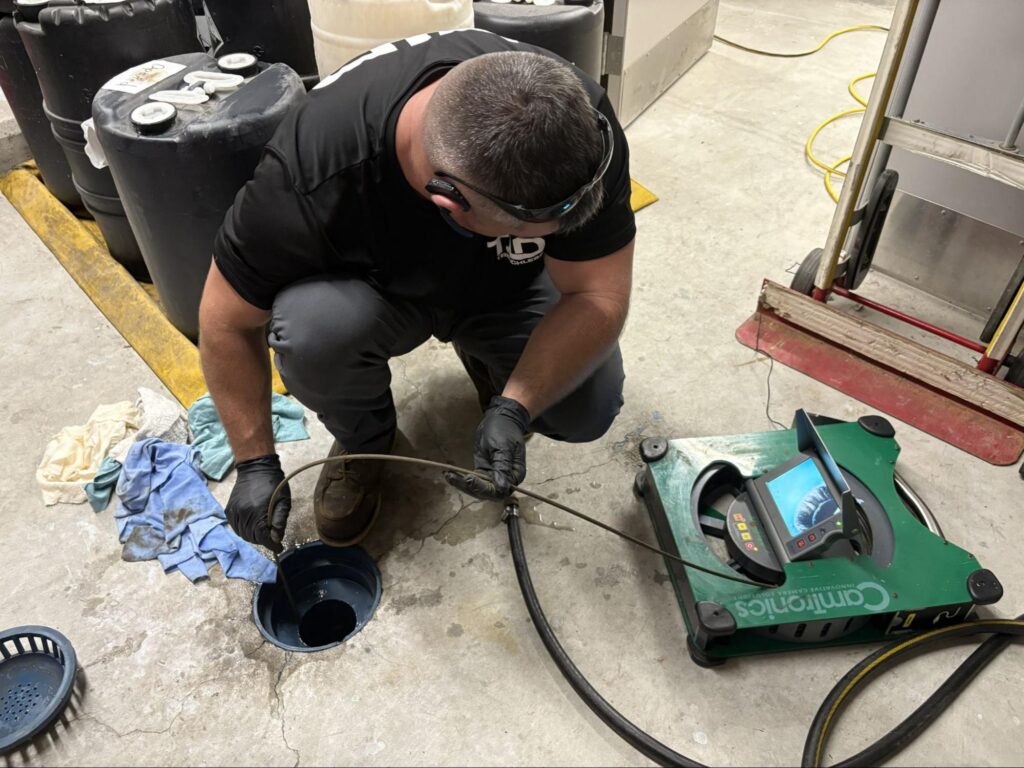
Not every Plymouth home ties into the same kind of line, and the fix depends on which one you have. TID Trenchless works both sides of that split. We clear town sewer connections and septic laterals across Plymouth, and we put a sewer camera in the line first, so you know exactly what you are dealing with before anything gets scheduled.
Know What You’re Dealing With First
A slow drain means something different depending on whether you are on town sewer or a septic system. A camera inspection tells you which one you are facing.
What a Drain Cleaning Visit Looks Like on a Septic or Sewer Line
The method of drain cleaning depends on what kind of line is actually clogged and what is causing it. A single blocked sink or tub usually just needs a cable-driven cutter run straight to the clog. Water backing up in more than one fixture at once, or backing up when water use is heavy, points to a problem further down the line. That usually calls for hydro jetting, which uses pressurized water to scour the full pipe wall instead of punching through one spot.
On a septic system, that main line runs to a tank instead of a street connection. A slowdown there can mean the tank or leach field is reaching its limit rather than a simple clog. This is where a septic call differs most from a typical sewer job. A camera inspection has to confirm the source before any work starts, because clearing a line that is backing up from a full tank will not solve anything.
Pipe age adds another layer. Older pipe corrodes and roughens on the inside over time, giving grease and debris more to catch on, so the same clog can come back faster in an older line than a newer one.
Services Built for Plymouth’s Sewer and Septic Lines
The right method depends less on where the house sits than on what the camera finds inside the line. A single slow fixture and a main line that has been narrowing for years call for different tools, and reaching for the wrong one usually means paying to do the job twice.
- Mechanical Drain Cleaning: A cable-driven cutter clears a single blocked fixture, such as a kitchen sink or bathroom drain, without disturbing the rest of the line.
- Hydro Jetting: High-pressure water strips grease, scale, and root growth off the full pipe wall, which matters most on a main line serving the whole house.
- Septic Line Cleaning: Clears the lateral running from the house to the septic tank, which is a different job from a municipal sewer connection and gets diagnosed differently.
- Main Sewer Line Cleaning: For homes on town sewer, clears the line running out to the street connection when more than one fixture is slow at once.
- Root Intrusion Removal: Cuts back roots that have worked into older pipe joints, which we see most in Plymouth’s established, tree-covered neighborhoods.
- Cast Iron and Clay Pipe Cleaning: Removes interior buildup from the older pipe materials still in the ground around Plymouth’s historic village centers.
- Sewer Camera Inspection: Confirms what type of system is involved and what it needs before we choose a cleaning method.
Plymouth’s housing runs from pre-1950 homes near the waterfront to developments built in the last twenty years, and what is buried under each one is different. Knowing which pipe you actually have is what keeps the work honest.
Get the Right Service for Your System
Guessing at a drain problem usually costs more than looking at it. A camera inspection takes the guesswork out before you spend anything.
Warning Signs That Differ Depending on Your System
What counts as a warning sign in Plymouth depends on whether you are on septic or town sewer, since the two systems fail in different ways.
Slow Drains Across the Whole House
On a septic system, this often points to the tank or leach field nearing capacity rather than a clog in the line itself. On town sewer, it usually means the main line running to the street needs attention. Either way, it is worth a look before it turns into a backup.
Sewage Odor Near the Yard or Septic Tank
A smell outside near the tank or leach field points to a septic problem rather than a sewer one, and it usually means something in the system needs attention before a backup reaches the house.
Backups That Follow Coastal Storms
In Plymouth’s low-lying coastal neighborhoods, nor’easters and seasonal high groundwater can push the water table up into a septic system’s leach field. Once the field is saturated, effluent has nowhere to percolate, and the backup moves toward the house instead. Plymouth’s own resilience planning names septic flooding around White Horse Beach as a known issue, and North Plymouth, Long Beach, and Manomet are all flagged for coastal flooding. If your backups line up with storm timing, mention that when you schedule the inspection.
A Clog That Keeps Coming Back
A drain that needs clearing every few months, on either system, usually has a cause beyond routine buildup, such as root intrusion or a structural issue. A camera inspection identifies which one you are dealing with.
Any one of these is worth a call. Two or more at the same time, especially after a storm or on a septic system that is getting up there in age, should move to the top of your list.
Based Down the Road in Plympton, Not Halfway Across the State
TID Trenchless is based in Plympton, a short drive from Plymouth. That closeness means our crew is already familiar with the town and already knows the difference between a Plymouth Center property tied into town sewer and a home out toward Carver running on a septic system.
We are veteran-owned, licensed, and insured in Massachusetts. John Shaw founded the company in 2019 after more than 13 years in wastewater infrastructure, including work as a foreman on municipal contracts. That background means the technician showing up at your house already knows what to look for, whether the call is about a septic lateral or a town sewer connection.
You see the camera footage yourself, not a summary of it. If it shows a structural problem instead of a simple clog, our trenchless sewer repair team picks it up from there.
What Homeowners Across Southeastern Massachusetts Say About TID
⭐⭐⭐⭐⭐
“John Shaw and his team were very professional and courteous. The work was done in a timely manner and John explained everything from start to finish. They saved me a lot of money. I highly recommend them, call them first.”
Douglas, Verified Customer
⭐⭐⭐⭐⭐
“A bad plumbing situation has turned into meeting a great person. John from TID Trenchless has shown professionalism, courtesy and knowledge of his job. My problem was fixed in no time. Plus, who doesn’t trust a Marine! Thank you for your service, John!”
M. M., Verified Customer
Find Out What’s Actually Wrong With Your Drain
Serving Plymouth and the South Shore
TID Trenchless provides drain cleaning throughout Plymouth, from Plymouth Center and North Plymouth out through West Plymouth, Chiltonville, Manomet, and Cedarville, covering both town sewer connections and the septic systems most of the town runs on. Our service area extends past Plymouth’s borders with Kingston, Carver, Wareham, Bourne, and Sandwich, and north to Duxbury and Plympton.
From the historic streets near Plymouth Rock and Plymouth Harbor to the neighborhoods near Pilgrim Memorial State Park and Plimoth Patuxet Museums, our crew covers homes across every part of town, no matter which system they are tied into.
Plymouth Drain Cleaning FAQs
How much does drain cleaning cost in Plymouth, MA?
Cost depends on the type of system involved, the length of the line, and what is actually causing the slowdown. A septic lateral and a town sewer connection are not priced the same way. A camera inspection confirms what your line needs, and TID Trenchless gives you a free estimate before any work begins.
Does TID Trenchless pump septic tanks, or just clear the line?
We clear the lateral running from the house to the septic tank, not the tank itself. MassDEP recommends pumping a septic system at least every three years, or once a year if you have a garbage disposal, and a licensed septic pumping service handles that. Title 5 separately requires a system inspection when the home sells. If a camera inspection shows the tank needs attention, we will point you to the right next step.
How do I know if my Plymouth home is on septic or town sewer?
Your town bill will not settle it, because a home on septic still gets a water bill. Look for a separate sewer charge on that bill. If there is not one, you are most likely on a private system. Sewer service runs mainly through Plymouth Center and North Plymouth, so homes further out usually are not connected. Your records at the Plymouth Health Department will confirm it, and so will our technician during the inspection.
Will drain cleaning require digging up my yard or septic system?
No. Drain cleaning is done through an existing cleanout or fixture drain and does not disturb the yard, tank, or leach field. Digging only becomes part of the conversation if a camera inspection finds a structural problem that cleaning alone cannot fix.
How often should Plymouth homes get drain cleaning?
It depends on the system. Homes on town sewer typically do fine with cleaning as problems come up, or about once a year as maintenance. Homes on septic benefit from a similar schedule for the lateral itself, which is separate from the every-three-year tank pumping MassDEP recommends.
How much does drain cleaning cost in Plymouth, MA?
Cost depends on the type of system involved, the length of the line, and what is actually causing the slowdown. A septic lateral and a town sewer connection are not priced the same way. A camera inspection confirms what your line needs, and TID Trenchless gives you a free estimate before any work begins.
Does TID Trenchless pump septic tanks, or just clear the line?
We clear the lateral running from the house to the septic tank, not the tank itself. MassDEP recommends pumping a septic system at least every three years, or once a year if you have a garbage disposal, and a licensed septic pumping service handles that. Title 5 separately requires a system inspection when the home sells. If a camera inspection shows the tank needs attention, we will point you to the right next step.
How do I know if my Plymouth home is on septic or town sewer?
Your town bill will not settle it, because a home on septic still gets a water bill. Look for a separate sewer charge on that bill. If there is not one, you are most likely on a private system. Sewer service runs mainly through Plymouth Center and North Plymouth, so homes further out usually are not connected. Your records at the Plymouth Health Department will confirm it, and so will our technician during the inspection.
Will drain cleaning require digging up my yard or septic system?
No. Drain cleaning is done through an existing cleanout or fixture drain and does not disturb the yard, tank, or leach field. Digging only becomes part of the conversation if a camera inspection finds a structural problem that cleaning alone cannot fix.
How often should Plymouth homes get drain cleaning?
It depends on the system. Homes on town sewer typically do fine with cleaning as problems come up, or about once a year as maintenance. Homes on septic benefit from a similar schedule for the lateral itself, which is separate from the every-three-year tank pumping MassDEP recommends.
One Call Covers Either System
Plymouth’s size means the fix looks different from one end of town to the other, but the first step is the same everywhere. Get a camera in the line before deciding what it needs.
Get in touch with our team to schedule an inspection or request a free estimate. We will look inside the line, tell you what is actually there, and only recommend work the footage supports.