

Lining the Century-Old Sewer Lines Beneath Cambridge’s Multi-Family Homes
Sewer pipe lining in Cambridge, MA often starts with a problem in the basement. In many two- and three-family homes, a single sewer line carries wastewater from every unit out to the city main. When that line begins to fail, the trouble usually appears at the lowest drain first. Often, it is a basement floor drain or a first-floor tub that backs up when water runs upstairs. About 47% of Cambridge’s housing units were built before 1940, according to Census estimates, and many of those buildings still drain through their original clay or cast iron pipe.
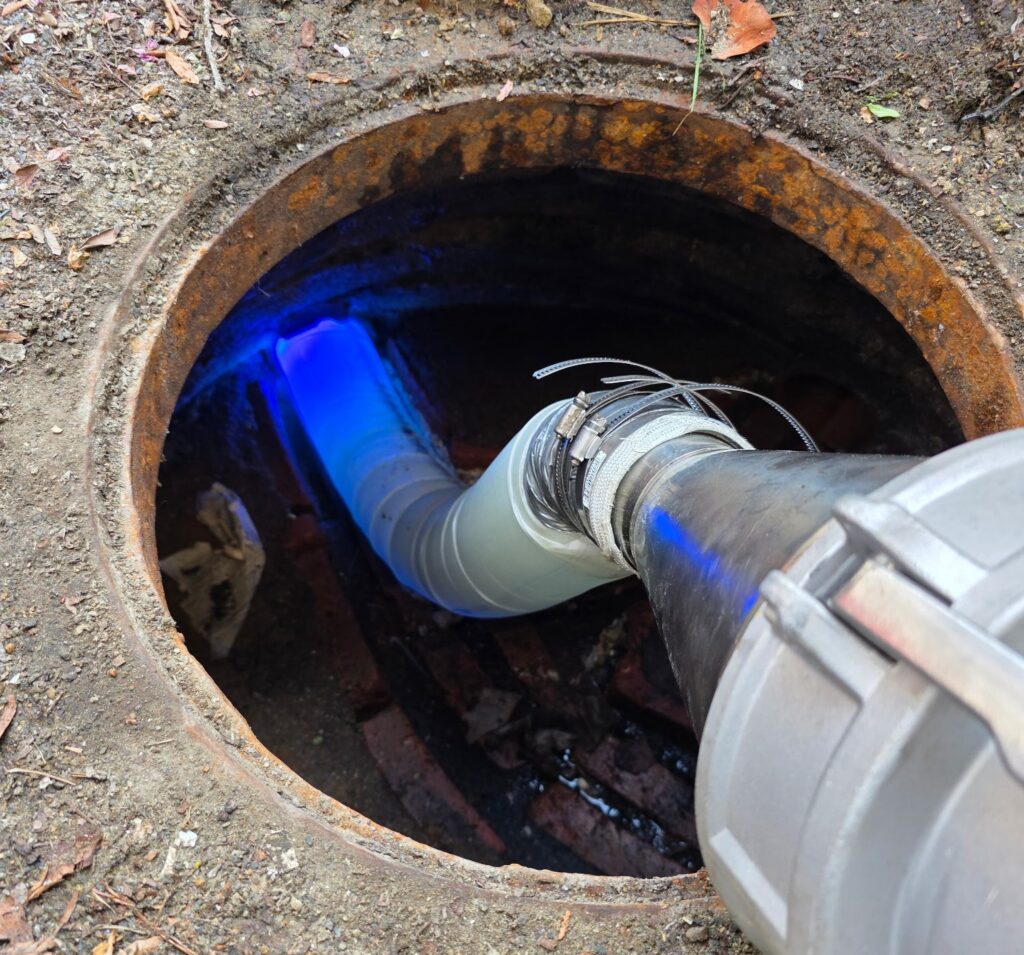
Lining repairs that pipe from the inside without opening a trench. A resin-soaked liner is installed through a cleanout or a small access point and hardened into a new pipe within the old one. For a residential building, this keeps the yard and walkway intact, and most jobs are completed in about a day.
TID Trenchless begins every lining project with a sewer camera inspection, so the repair recommendation is based on the actual condition of your pipe. After the liner cures, another camera pass confirms the finished repair.
Find Out Whether Your Building’s Sewer Line Can Be Lined
A camera inspection shows the condition of the full line, from the basement to the street connection, before you spend anything on a repair.
Why Pipe Lining Fits a City Where Sewage and Stormwater Still Share Pipes
Sewer pipe lining is most often done with CIPP, short for cured-in-place pipe. A flexible tube coated in resin is placed inside the damaged line and pressed against the old pipe walls. Once the resin hardens, it forms a new, solid pipe inside the old one.
This matters in Cambridge because about 45% of the city’s sewer system still carries sewage and rainwater in the same pipes. Heavy storms can fill that system quickly. Old clay and cast iron sewer lines also tend to crack and loosen at the joints, which lets groundwater and soil leak in. A liner seals those weak points, so your line carries only what drains from your building.
The City of Cambridge uses this method as well and has hired contractors to reline its own public sewer and drain pipes. Homeowners can use the same approach on the private line that runs from their building to the street.
Pipe Lining Services for Cambridge Homes and Multi-Unit Buildings
Older sewer lines in Cambridge are rarely made of a single material. One run can change from cast iron inside the foundation to clay under the yard, with a short section of PVC where someone made a repair years ago. The right sewer pipe lining plan depends on what the line is made of and where it is damaged.
- Full-Length Lateral Lining: When the camera shows damage along most of the run, a continuous liner renews the line from the building out toward the street in one installation.
- Spot Repairs: When the camera shows one damaged section and the rest of the pipe is sound, the repair can focus on that section instead of the full line.
- Cast Iron Descaling: Built-up rust and scale are cut away so the liner bonds to clean pipe walls.
- Hydro Jetting and Root Removal: High-pressure water clears roots, grease, and debris before the liner goes in.
- Epoxy Pipe Coating: A protective epoxy coating is applied to the inside walls of a corroded pipe to seal minor cracks and slow further corrosion.
- Multi-Unit and Commercial Lining: Larger buildings with shared lines are scheduled with residents and operations in mind.
Most projects combine more than one of these services. A line with heavy scale and a few root-filled joints, for instance, needs thorough cleaning before any liner can bond to it. Matching the right preparation to the right liner is what makes the repair last, and that depends on knowing exactly what is in the ground.
Get a Lining Plan Built Around Every Unit in Your Building
How Cambridge’s Filled Ground and Street Trees Show Up on a Sewer Camera
Large parts of Cambridge, including Cambridgeport and the area around MIT, were built on filled marshland. The city also cares for roughly 24,000 public trees, about 15,500 of them along its streets. Over decades, both put steady pressure on old pipe joints, and a camera inspection shows how that pressure has affected your line.
Roots Growing Through Clay Joints
Clay pipe was laid in short sections, and roots work their way into the small gaps where those sections meet. Once inside, they spread into a mat that catches waste and causes repeat clogs. Once drain cleaning in Cambridge clears the roots, a liner covers every joint at once and leaves no opening for new growth to enter.
Joints Pulled Out of Line
Soil that settles over time, including old fill, can shift a section of pipe so its edge no longer lines up with the next one. The result is a ledge where debris collects. Liners can bridge minor offsets of this kind, while larger shifts may need a short excavated repair before lining can go ahead.
Cracks Along the Bottom of Cast Iron
Cast iron wears thinnest along the bottom, where wastewater flows every day. Over time, that channel can crack or split open. Lining is often a strong fit for this damage because the cured liner forms a new, continuous floor once the old pipe is cleaned.
Sags and Collapsed Sections
A section that has sunk into a low spot, called a belly, holds standing water and waste. A liner follows the shape of the existing pipe, so it cannot correct a significant belly. The same limit applies to a pipe that has collapsed. In those cases, pipe bursting or a short excavated repair is usually the better option.
Most older lines show more than one of these conditions along their length. For that reason, the repair plan is set only after the full run has been inspected. This keeps TID Trenchless from recommending a liner where it will not hold up, or a larger repair where a liner would do the job.
Lining Century-Old Cambridge Sewer Lines Takes Specialist Experience
John Shaw, a Marine veteran, founded TID Trenchless in 2019 after more than 13 years in wastewater infrastructure. Before starting the company, he worked as a project manager for a large trenchless manufacturer and trained contractors around the world on its systems. That background gives him a working knowledge of how liner products are designed, as well as how they are installed.
TID Trenchless handles the full range of trenchless sewer repair in Cambridge, and pipe lining is at the center of that work. The company is licensed and insured in Massachusetts. Every project includes a free estimate, so property owners can weigh the cost of lining before committing to anything.
What Property Owners Say After Their Sewer Line Is Lined
⭐⭐⭐⭐⭐
Jared C., Verified Customer
“My sewer pipe kept backing up into my basement. The guys from TID came over and took a video of the entire pipe, showing me where tree roots had been growing through the pipe causing it to back up. They are extremely thorough and professional, providing me with a step by step analysis of the process they use to reline the pipe, rather than digging up my entire yard… The guys were at my house first thing in the morning and had my house back up and running by the afternoon… I can’t recommend this company enough!”
⭐⭐⭐⭐⭐
Tiffany M., Verified Customer
“Working with TID Trenchless has been very easy from start to finish. From the moment my issues started the response time was quick and working with John and his team was great. Our job was more complicated that I originally thought, but it was handled very professionally and no trouble at all. We were able to get our problem resolved quickly and I was kept in the loop every step of the way. I would highly recommend choosing TID Trenchless for any issues you may have and will definitely use them in the future if needed.”
Get Answers Before You Commit to Anything
Serving North Cambridge, Cambridgeport, and Neighborhoods Across the City
Sewer pipe lining is available throughout Cambridge, including North Cambridge, Cambridgeport, Wellington-Harrington, Neighborhood Nine, West Cambridge, and Riverside. That covers homes near Porter, Inman, and Central Squares, the streets around Huron Village and Fresh Pond Reservation, and the blocks near Danehy Park and Alewife Brook. Properties on the Cambridge side of Mount Auburn Cemetery and the Cambridgeport blocks near Magazine Beach along the Charles River are part of the same service area.
Beyond the city line, TID also serves neighboring Somerville, along with nearby Newton, Brookline, and Waltham. Based in Plympton, the company provides trenchless sewer repair throughout Greater Boston and Southeastern Massachusetts.
Cambridge Sewer Pipe Lining FAQs
Will sewer pipe lining stop my basement from backing up during heavy rain?
Not always. Lining repairs problems inside your own sewer line, which can reduce backups that start on your property. If the city main fills past capacity during a storm, however, water can still push back toward the building. A backwater valve is the usual safeguard for that situation. It is a device on the building’s sewer line that closes when flow reverses. Cambridge requires one on plumbing fixtures that sit below street level.
Who is responsible for the sewer line between my building and the street in Cambridge?
In Cambridge, the property owner is responsible for the full sewer line, from inside the building to and including the connection at the city main. That means a crack under the sidewalk or street is the owner’s repair. Under the city’s sewer and drainage regulations, repair work on that line needs Department of Public Works approval and an Excavation Permit before it starts, and it must be done by a DPW-licensed, bonded drain layer.
Can tenants stay in the building while the sewer line is being lined?
Yes, residents can usually stay home during the work. Water use has to stop while the liner is installed and curing, since nothing can drain through the line until the resin hardens. For most residential lines, that window is measured in hours, not days. The exact timing depends on the liner and cure method, so confirm it before the work is scheduled and give tenants advance notice.
What is the average cost to reline a sewer pipe?
There is no dependable average, because relining is priced to the specific sewer line. The main factors are the pipe’s length and condition, how much cleaning it needs first, and how much of the run needs lining. A camera inspection gives you a price based on your actual pipe.
How long does a lined sewer pipe last?
A properly installed CIPP liner is designed to last for decades. The cured resin resists corrosion, so it does not rust the way cast iron does. Actual service life depends on installation quality and how the line is used, including what goes down the drains. Lined pipe is usually cleaned with hydro jetting rather than a cable machine.
Talk Through Your Sewer Lining Options With a Trenchless Specialist
If your building has an older sewer line, or you have noticed slow drains or recurring backups, the next step is a clear look inside the pipe. You will see the footage, hear what it means, and know what the repair involves before any work is scheduled.
Call TID Trenchless or reach out online to set up a camera inspection for your Cambridge property.