TL;DR
A properly installed CIPP sewer liner is engineered for a 50-year service life or longer, a benchmark set by ASTM F1216 and backed by EPA testing on liners pulled out of the ground after decades in service. Whether your liner actually gets there comes down to installation: how well the pipe was cleaned, how completely the liner cured, whether the liner was sized for the pipe’s real condition, and whether the pipe was a good candidate at all. A camera inspection before and after the job is what confirms you got the lifespan you paid for.
A cracked or corroded sewer line is already expensive to fix. The last thing you want is a repair that fails early. Homeowners across Southeastern Massachusetts weighing sewer pipe lining against a full excavation ask the same question first: how long does sewer pipe lining last, and does that lifespan justify what it costs compared to a full replacement? The answer depends on more than the number printed on a brochure.
That question comes up more here than in most parts of the country. Roughly 45% of the housing stock in Southeastern Massachusetts was built before 1960, and homes from that era were plumbed with cast iron and clay sewer lines that are now at or past the end of their service life.
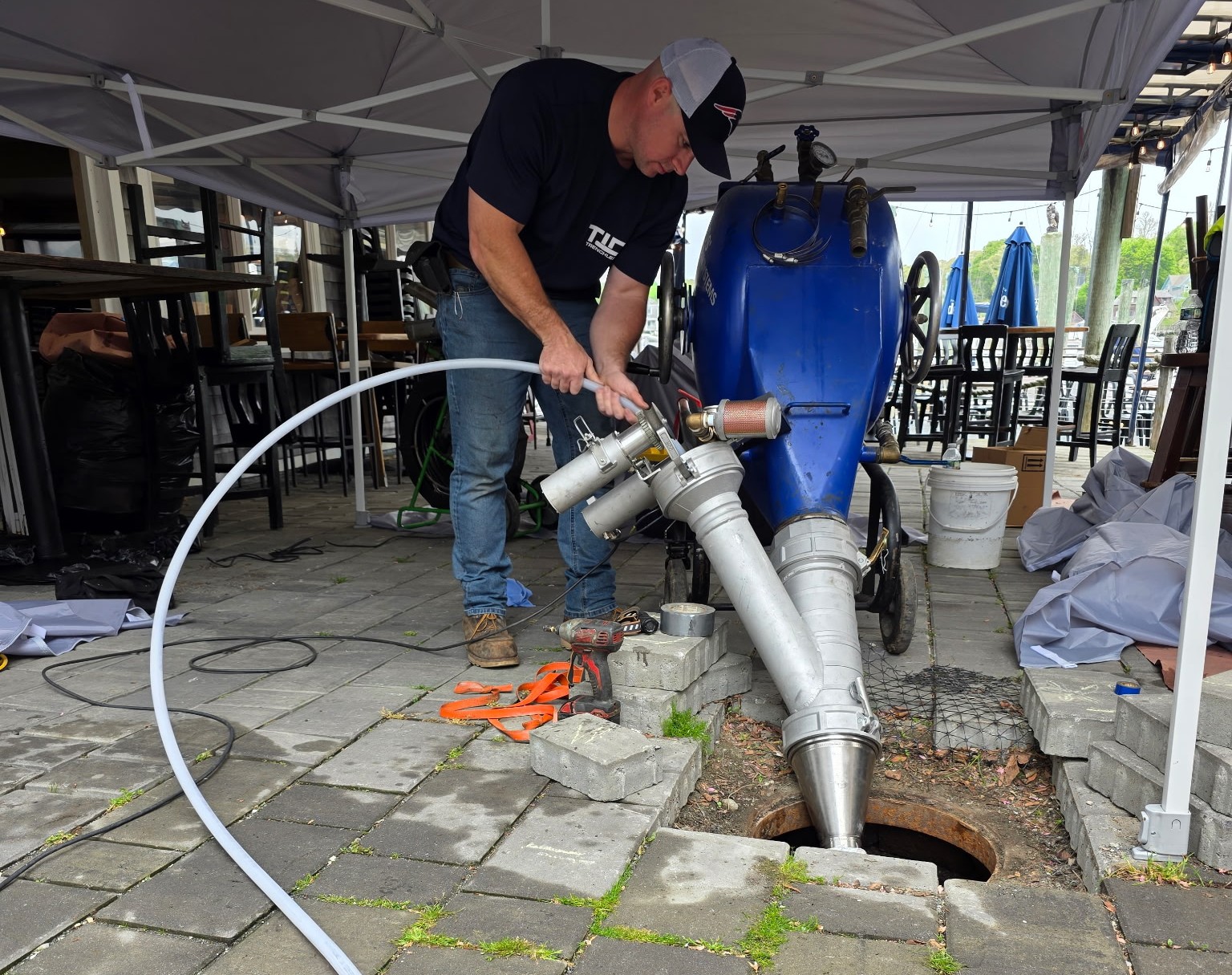
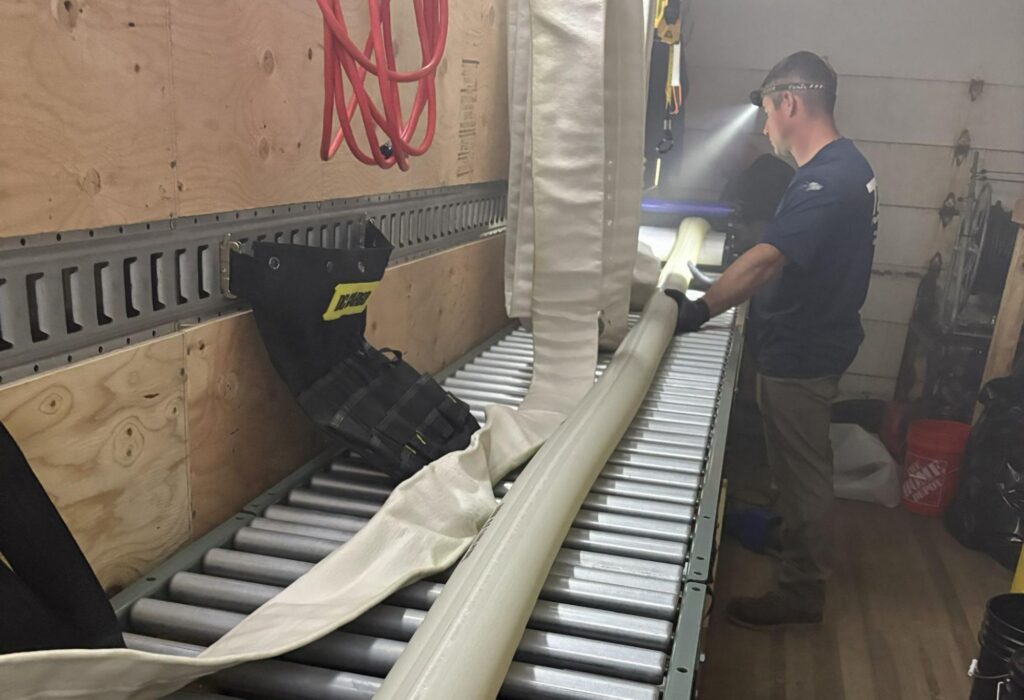
Sewer pipe lining, also called cured-in-place pipe lining or CIPP, rehabilitates a damaged pipe from the inside using a resin-saturated liner that hardens into a smooth, jointless surface once cured. The method has been used in the wastewater industry for decades, and the liner it produces is designed to protect a pipe for 50 years or more.
This guide breaks down what actually determines how long a liner holds up, what can cut that lifespan short, and how to know your installer did their job right.
What Determines How Long a Sewer Pipe Liner Lasts?
The 50-year number is not a marketing figure. It comes from ASTM F1216, the national standard that governs how CIPP liners are designed and installed. Under that standard, a liner is engineered and sized to hold up under 50 years of continuous load. NASSCO, the industry association that writes the model specifications most cities and towns adopt, carries the same benchmark. Its CIPP specification guideline states that the liner shall be designed for a life of 50 years or greater.
Field testing backs it up. A study funded by the U.S. Environmental Protection Agency pulled liners out of the ground after 5 to 25 years of service and tested them in a lab. The liners came back in excellent condition, and the researchers found no reason to expect them to fall short of a 50-year life.
One honest caveat. CIPP has only been in use since 1971, so no liner anywhere has finished a full 50 years yet. Fifty years is an engineered and tested design life, not a milestone the industry has already crossed. It also is not a guarantee stamped on every job. Whether your liner gets there depends far more on the crew that installs it than on the liner itself.
What Can Shorten a Liner’s Lifespan?
A liner is only as good as the pipe it goes into and the crew that puts it there. Four things separate a liner that reaches 50 years from one that fails early.
Skipped or Rushed Cleaning
This is one of the most common causes of early liner failure, and it happens before the liner ever enters the pipe. Before a liner goes in, hydro jetting has to clear out grease, mineral scale, and root mass so the liner can cure against a clean, uniform surface. A liner cured over leftover debris takes the shape of that debris. That is how you end up with wrinkles, folds, and thin spots, and those are exactly the places that fail years earlier than they should.
Incomplete Curing
The resin has to harden all the way through, using ambient conditions, heat, or UV light, before the liner can handle daily use. A crew that calls the job finished before the liner has fully cured leaves behind something that looks done on the surface while the material underneath stays soft and vulnerable.
The Original Pipe’s Condition
Sewer pipe lining works best on pipes that are cracked, corroded, or root-damaged but still structurally intact. A pipe that has already collapsed or lost its shape is not a good candidate for lining alone, and a contractor who lines it anyway is setting the homeowner up for a repeat repair.
The Liner Was Sized for the Wrong Conditions
ASTM F1216 sorts every job into one of two categories. A pipe that is cracked but still carrying the weight of the soil above it is called partially deteriorated, and the liner only has to handle water pressure. A pipe that can no longer carry that load is called fully deteriorated, and the liner has to carry all of it on its own. That second job needs a thicker, stronger liner.
Get that call wrong and the liner is undersized from day one. It can look perfect on camera the day it is installed and still deform under load years later. This is a judgment made before anyone orders material, which is why the camera inspection at the front of the job matters as much as the installation itself.
None of these are things a homeowner can check on their own. All four come down to whether the contractor is thorough and honest about what they are looking at, not whether the liner is a good product. Across the industry, installation quality is the single biggest factor in whether a liner reaches its design life.
How Does Sewer Pipe Lining Compare to Other Repair Methods?
Homeowners often ask how a liner’s lifespan stacks up against simply replacing the pipe. Here is a straightforward look at how the main options compare.
| Repair Method | Typical Lifespan | Property Disruption |
|---|---|---|
| Sewer Pipe Lining (CIPP) | 50-year design life, with 40 to 60 years a realistic expectation when installed correctly | Minimal, done through existing access points |
| Pipe Bursting with HDPE | 50 to 100 years, since HDPE is commonly rated for a 100-year service life | Access pits at each end, no full-length trench |
| Spot Patch or Localized Repair | 20 to 50 years for the patched section only, and it does nothing for the rest of the line | Limited, but it does not address pipe-wide deterioration |
For a pipe that is still structurally sound, lining delivers a comparable lifespan to replacement with far less disruption to the property. For a pipe that has collapsed or lost its shape, pipe bursting is the more reliable long-term fix, and the HDPE that replaces the old line carries a longer rated life than a liner does. The honest answer is that the pipe’s condition picks the method, not the other way around.
How to Make Sure Your Liner Reaches Its Full Lifespan
The lifespan of your liner is decided before the resin ever cures. This is why the process leading up to installation matters as much as the liner itself. TID Trenchless starts every job with a sewer camera inspection to confirm the pipe is a good candidate for lining. From there, a thorough hydro jetting pass prepares the pipe surface, and a second camera pass after curing confirms the liner set smooth and tight against the pipe wall, with no wrinkles or gaps, before the job is called done.
That final inspection is a step some contractors skip. Skipping it means nobody confirms the liner went in the way it was supposed to, which is a risk no homeowner should have to carry on a repair meant to last five decades. TID Trenchless treats that final check as part of the job.
Is Sewer Pipe Lining Worth What It Costs?
Most homeowners compare repair options by looking at the estimate. The more useful comparison is what each option costs per year of service you get out of it.
A liner that runs 40 to 60 years is doing the same job as a replacement line over roughly the same stretch of time. The difference shows up in everything around the pipe. A full excavation means opening the yard, and often the driveway, the walkway, or the landscaping on top of it. That work has to be undone when the pipe is back in the ground. Restoration is not a line item most homeowners think about until they are looking at a bare trench where their front lawn used to be, and on some properties it rivals the cost of the pipe work itself.
Lining goes in through existing access points. There is no trench to fill and nothing to rebuild afterward, which is why the total spend on a lining job usually lands below a comparable excavation once restoration is accounted for. Spread across a 50-year design life, the annual cost of a properly installed liner is hard to beat.
Where that math breaks down is on a pipe that was never a good lining candidate. A liner installed in a collapsed line, or sized for the wrong conditions, is not a 50-year repair. It is a repeat repair, and the second job costs more than doing it right the first time. That is the real cost risk on this kind of work, and it has nothing to do with the price on the estimate.
This is why TID does not quote a sewer repair before running a camera down the line. The condition of your pipe decides which method makes sense, and no honest number exists before someone has actually seen it. Estimates are free, and they come after the inspection, not before.
What to Ask Before You Hire Someone to Line Your Pipe
Everything above comes down to one thing: the crew. The liner is a proven product with a national standard behind it, but whether yours reaches 50 years depends on decisions made before, during, and after the install, and most of them are invisible to you once the pipe is closed up. These four questions are worth asking before you sign anything.
Will you camera the line before you quote it? If the answer is no, keep calling. Nobody can tell you whether your pipe is a lining candidate without looking inside it.
Is my pipe partially or fully deteriorated, and how did you decide? This determines how thick your liner needs to be. A contractor who cannot explain which category your pipe falls into has not done the design work the standard requires.
How will you clean the pipe first, and how long will that take? Look for hydro jetting, and be skeptical of anyone who treats prep as a quick pass. Heavy scale takes real time to clear.
Will you camera the line again after the liner cures, and do I get the footage? This is the step most often skipped, and it is the only proof the job was done right. The footage is yours to keep, and it is what you hand a buyer or a home inspector later.
None of these require you to know anything about pipes. They require the contractor to explain their own process, and the answers tell you quickly whether you are talking to a trenchless specialist or someone who added lining to a service list. TID answers all four before a quote goes out, because the reader deserves to know what they are buying before anyone opens a truck.
Sewer Pipe Lining Lifespan FAQs
What happens once a sewer pipe liner reaches the end of its lifespan?
A liner near the end does not usually fail all at once. It tends to show gradual signs first, like slow drainage coming back or minor odors, which a follow-up camera inspection catches early. From there the options are the same as any aging line: a spot repair, a second liner if the pipe still has the diameter to spare, or replacement.
Does pipe lining make my sewer pipe smaller?
Slightly, yes. A liner adds a few millimeters of wall thickness, so you lose a small amount of diameter. Flow usually improves anyway, because the cured liner is smooth and jointless while the old pipe it replaced was rough with scale, corrosion, and root intrusion. A smaller smooth pipe moves water better than a larger rough one.
Is a lined pipe as strong as a brand-new pipe?
A cured CIPP liner creates a smooth, jointless surface with no gaps for roots to find and nothing for corrosion to eat through, which is what eventually takes down older cast iron and clay pipes. It performs comparably to new pipe for everyday use.
Does the type of pipe being lined affect how long the liner lasts?
The material matters less than the condition. A cured liner is a new pipe inside the old one, and TID lines cast iron, clay, PVC, and concrete throughout Southeastern Massachusetts. What changes the job is how far gone the host pipe is, because that determines how thick and how strong the liner has to be. Older cast iron and clay also carry heavier scale, so the cleaning pass takes longer.
Will pipe lining affect my home’s resale or a home inspection?
It usually helps. A sewer scope inspector will see that the line has been lined, and a properly installed liner shows up as a smooth pipe with no cracks, joints, or root intrusion to flag. That reads far better than an original cast iron line at the end of its life. Keep your paperwork: the post-installation camera video and your warranty are what turn a liner into a selling point.
What happens once a sewer pipe liner reaches the end of its lifespan?
A liner near the end does not usually fail all at once. It tends to show gradual signs first, like slow drainage coming back or minor odors, which a follow-up camera inspection catches early. From there the options are the same as any aging line: a spot repair, a second liner if the pipe still has the diameter to spare, or replacement.
Does pipe lining make my sewer pipe smaller?
Slightly, yes. A liner adds a few millimeters of wall thickness, so you lose a small amount of diameter. Flow usually improves anyway, because the cured liner is smooth and jointless while the old pipe it replaced was rough with scale, corrosion, and root intrusion. A smaller smooth pipe moves water better than a larger rough one.
Is a lined pipe as strong as a brand-new pipe?
A cured CIPP liner creates a smooth, jointless surface with no gaps for roots to find and nothing for corrosion to eat through, which is what eventually takes down older cast iron and clay pipes. It performs comparably to new pipe for everyday use.
Does the type of pipe being lined affect how long the liner lasts?
The material matters less than the condition. A cured liner is a new pipe inside the old one, and TID lines cast iron, clay, PVC, and concrete throughout Southeastern Massachusetts. What changes the job is how far gone the host pipe is, because that determines how thick and how strong the liner has to be. Older cast iron and clay also carry heavier scale, so the cleaning pass takes longer.
Will pipe lining affect my home’s resale or a home inspection?
It usually helps. A sewer scope inspector will see that the line has been lined, and a properly installed liner shows up as a smooth pipe with no cracks, joints, or root intrusion to flag. That reads far better than an original cast iron line at the end of its life. Keep your paperwork: the post-installation camera video and your warranty are what turn a liner into a selling point.
Get a Straight Answer About Your Sewer Line
A 50-year lifespan means something only if the job behind it was done right. The liner material has the track record to back up that number, but the prep work, the curing process, and an honest read on whether your pipe qualifies are what actually get you there.
If you are trying to decide whether sewer pipe lining is the right call for your property, the fastest way to get a real answer is a camera inspection, not a guess based on age or symptoms alone. TID Trenchless was founded by John Shaw after 13 years working in wastewater and underground infrastructure, and every recommendation still starts the same way: seeing the actual condition of your pipe before anyone talks about a repair. Contact TID Trenchless to schedule an inspection and find out what your sewer line actually needs.