Quick Answer
Epoxy pipe coating is a no-dig repair that seals the inside of an old drain or sewer pipe with hard epoxy.
It fits pipes with rust, pinholes, or small cracks that are still solid. Most residential jobs take one to two days, and every TID job starts with a sewer camera inspection.
Epoxy Pipe Coating Seals Corroded Pipes Without Opening a Wall or Floor
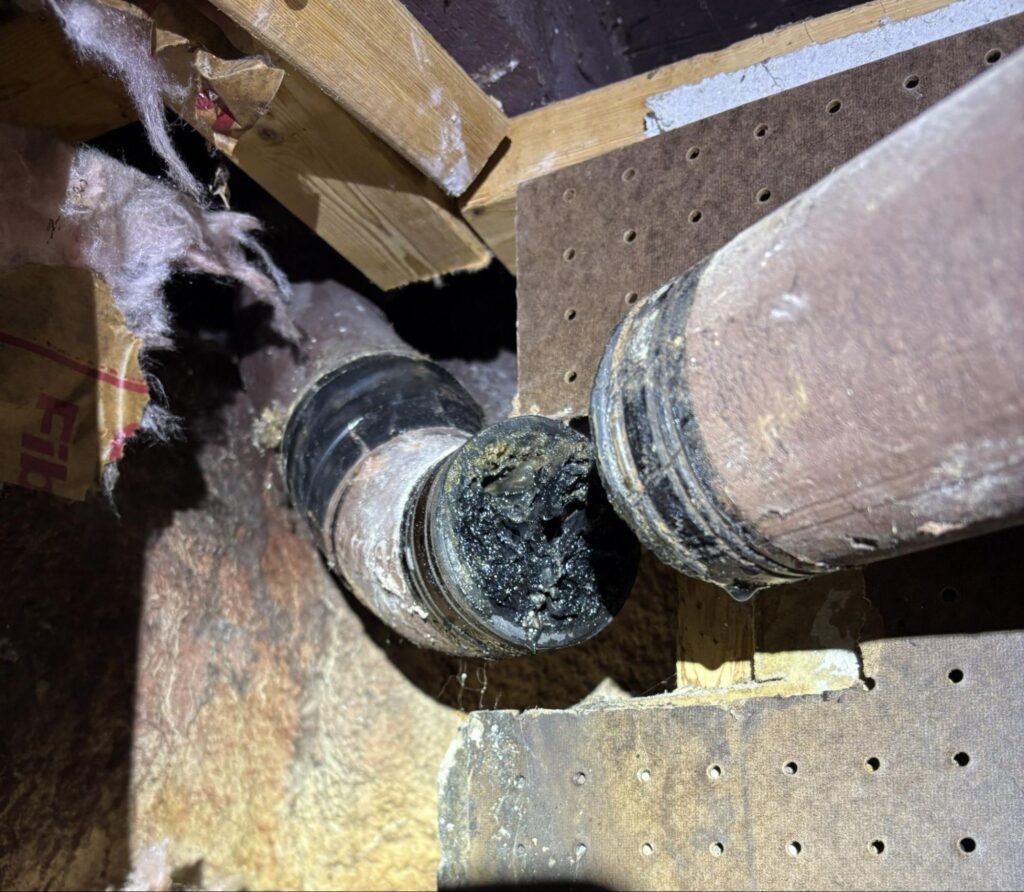
Epoxy pipe coating is often the most practical fix for the old cast iron drain lines found in so many Greater Boston and Southeastern Massachusetts homes. The problem usually shows up as a rust stain on the basement floor under an old pipe, a small drip at a joint, or a drain that keeps slowing down no matter how often it gets cleared. A large share of houses across the region were built well before 1980, and their cast iron and clay pipes are now at or past the end of their expected life. Cast iron wears out from the inside first, as rust and scale build up on the walls and slowly thin the pipe until it leaks.
Replacing those pipes usually means cutting into finished floors, walls, or a basement slab to reach them. Coating restores the pipe you already have, in place, so the job takes far less demolition and cleanup. TID Trenchless looks at every pipe on camera before recommending a repair. If yours is too damaged to coat, you will hear that up front, along with the fix that will actually hold.
Find Out If Your Pipe Can Be Coated
A camera inspection shows whether your pipe is a good fit for coating or needs a different fix, before you commit to anything.
What Epoxy Pipe Coating Does Inside an Old Pipe
Epoxy pipe coating rebuilds the inside of a corroded drain or sewer line by bonding a new layer of epoxy directly to the old pipe wall. Once it cures, the epoxy forms one continuous shell that seals pinholes and small cracks, smooths out rough spots, and stops rust from eating further into the pipe. It is a semi-structural repair, which means it adds strength to the pipe wall but still depends on the old pipe holding its shape. You may also hear it called epoxy pipe lining, but it is a different method from CIPP (cured-in-place pipe) lining, which installs a resin-soaked liner that hardens into a new pipe inside the old one.
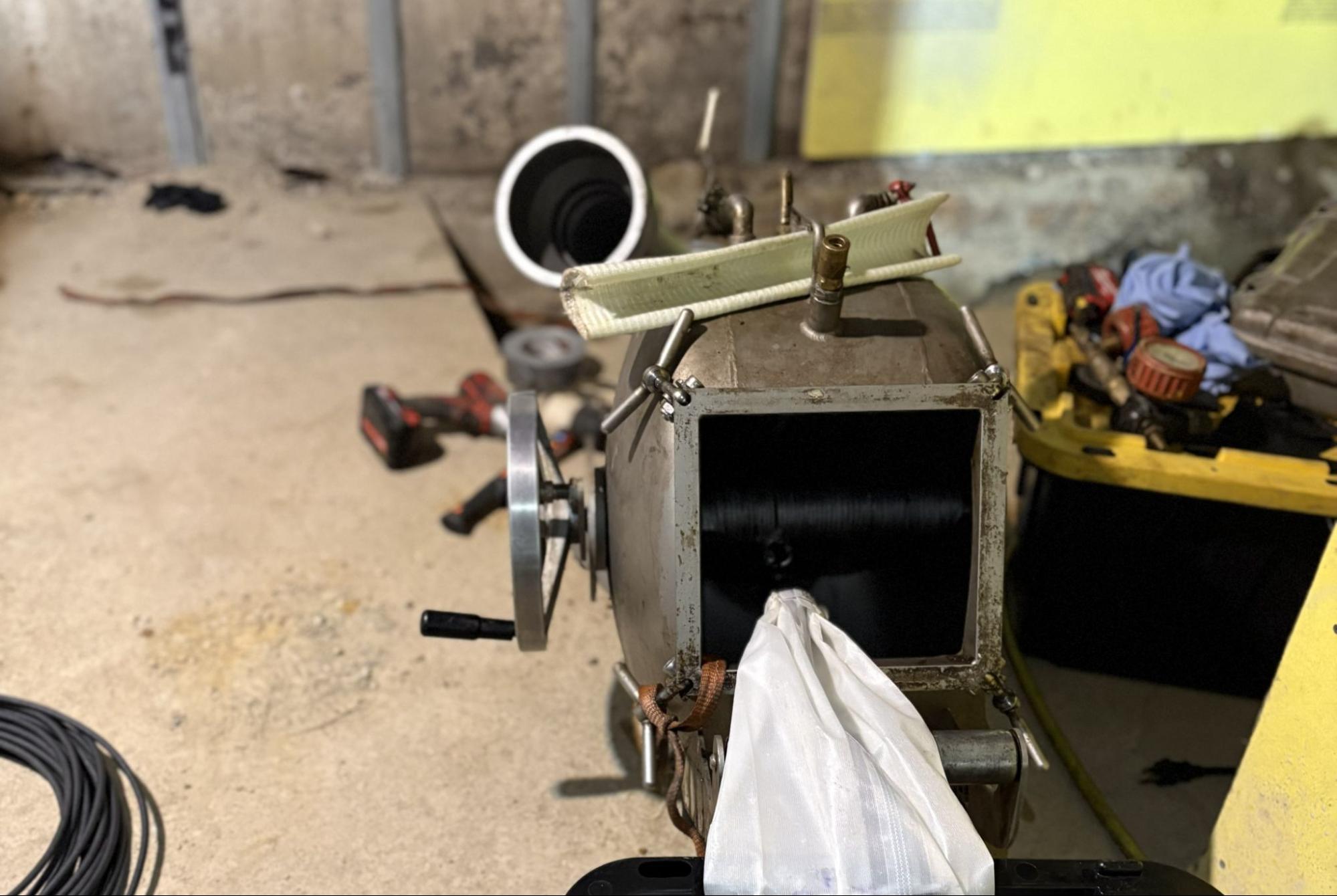
Coating treats the whole run of pipe between access points, so it protects the sections that are just starting to rust along with the spot that is already leaking. Before any epoxy goes in, the pipe is cleaned back to its original diameter using hydro jetting and a milling machine that grinds away rust, scale, and roots. That cleaning matters as much as the epoxy itself, because epoxy only bonds well to a clean, dry pipe wall. The epoxy is then brushed on in several coats, and a final camera pass shows you the finished surface.
Cast iron drain lines are the most common candidates, especially in older homes, and coating also works on galvanized steel drain pipes that are still holding their shape. What changes from job to job is the pipe’s size, its length, the number of bends, and how much buildup has to come out first. Most residential jobs take one to two days. The line stays out of use while the epoxy cures, and cleanup afterward is minimal because nothing gets dug up.
What Changes After Your Pipe Is Coated
Coating fixes the leaks, slow drains, and rust stains that come with aging cast iron, without replacing the pipe or opening up your home. You end up with a sealed, smooth drain that keeps working, and the rest of your house stays exactly as it was.
No Torn-Out Floors, Walls, or Ceilings
The work happens inside the pipe, through existing cleanouts or a small access opening, so finished basements, tile, and drywall stay untouched. That matters most when the drain runs above a finished ceiling or under a basement slab. Reaching it the old way means demolition first, then a second round of repair work once the new pipe is in.
Corrosion Stops Where It Started
Cured epoxy does not rust, so it puts a barrier between the old metal and the water and waste that were eating it away. Pinholes and small cracks are sealed in the same pass, so the drips and rust stains they caused stop too.
Drains Flow Like They Should Again
Decades of rust and scale can narrow the inside of a cast iron drain until water backs up even after a cleaning. Removing that buildup opens the pipe back up. The smooth epoxy surface also gives new buildup far less to cling to than bare, pitted iron.
Done in One to Two Days
Most residential jobs take one to two days, with no construction project to plan your week around. You also do not need to line up a separate contractor afterward to patch drywall or re-tile a floor.
Coating is not the answer for every pipe. When the pipe is still solid, though, it solves the leak and the slow drain together and leaves the rest of your home alone.
See What Coating Your Pipe Would Cost
TID gives free estimates once the camera shows what your pipe actually needs.
How a Pipe Gets Coated, Step by Step
Every coating job follows the same five steps, inspect, clean, dry, coat, and verify, and most residential jobs are finished in one to two days. The order matters because each step depends on the one before it. If the cleaning is rushed or the pipe is still damp, the epoxy will not bond properly, and the repair will not hold.
1. A Camera Inspection Shows Whether Coating Will Work
A camera goes into the line to check the pipe’s condition, find the damage, and look for anything coating cannot fix, like a collapsed section or a badly separated joint. You see the footage too, so the recommendation is based on what is actually inside the pipe. If coating is not the right repair, this is where you find out.
2. Cleaning Strips the Pipe Down to Solid Wall
On heavily scaled cast iron, cleaning is usually the longest part of the job. Hydro jetting and milling remove rust, scale, and roots until the camera shows clean pipe wall. It also works as a second checkpoint, because once the scale is gone, the camera shows how much solid pipe is actually left.
3. The Pipe Is Dried Completely
Epoxy will not bond to a wet surface, so the line is dried out and kept clear of water before any coating goes in. During this stage, nothing can drain into that line.
4. Epoxy Goes On in Several Coats
An epoxy pump feeds the epoxy to the far end of the pipe, and high-speed spinning brushes spread it across the walls in several coats. Building it up in layers covers pits and rough spots evenly instead of leaving thin areas. The drain stays out of use while the epoxy cures, usually several hours to overnight depending on the product and the temperature.
5. A Final Camera Pass Confirms the Work
Once the epoxy has cured, the camera goes back through the line so you can see the finished coating from end to end. You get documentation of the work, and the drain goes back into normal use.
Coating, Lining, or Replacement: How the Right Repair Gets Chosen
The right repair depends on how much solid pipe is left. Epoxy coating fits pipes that are corroded but still intact, CIPP lining fits pipes that need real structural strength, and pipe bursting or replacement is for pipes that have already failed. The camera inspection and the cleaning step together show which group your pipe falls into.
The deciding factors are the thickness of the pipe wall once the scale is gone, whether any cracks go all the way through, and whether joints have shifted or sections have sagged. If the pipe is cracked through or the joints have pulled apart, sewer pipe lining is the stronger fix, because the liner hardens into a new pipe that can stand on its own. Pipe material matters too. Orangeburg pipe, a tar paper drain line used in many mid-century homes, softens and loses its shape over time, so it usually needs replacement rather than a coating or a liner.
| What to Compare | Epoxy Pipe Coating | CIPP Pipe Lining | Pipe Bursting | Dig and Replace |
|---|---|---|---|---|
| How it works | Epoxy brushed onto the cleaned pipe wall in several coats | Resin-soaked liner cured into a new pipe inside the old one | Old pipe is split apart as new pipe is pulled through its path | Old pipe is dug out and new pipe is laid |
| Best for | Corroded pipe that still holds its shape, especially indoor cast iron drains | Cracked, leaking, or root-damaged pipe that is still in place | Badly damaged or collapsed underground sewer lines | Collapsed pipe that trenchless methods cannot reach |
| Strength | Semi-structural, relies on the old pipe | Structural, stands on its own | Brand-new pipe | Brand-new pipe |
| Typical lifespan | 10 to 25 years, depending on pipe condition and prep | 50 years or more | 50 years or more | 50 years or more |
| Main tradeoff | Cannot fix cracked-through, shifted, or collapsed pipe | Slightly narrows the inside of the pipe | Needs a small access pit at each end | Most disruption to yards, floors, and finished spaces |
Most homeowners know which of these fits before an estimate is ever written. The camera footage usually makes the choice clear on its own.
What Drives the Cost of Epoxy Pipe Coating
The cost of epoxy pipe coating comes down to how much pipe needs work, how much buildup has to come out first, and how easy the pipe is to reach. National cost guides often quote $80 to $250 per linear foot for epoxy pipe repair, but that range blends coating and CIPP lining jobs and does not account for the condition of your specific pipe. An accurate price for your home takes a look inside the line first.
- Length of pipe. Coating covers the full run between access points, so a longer run takes more epoxy and more working time.
- Pipe diameter. Larger pipes need more epoxy to reach the same coating thickness, along with larger cleaning and coating heads.
- How much buildup has to come out. Heavy rust and scale add cleaning time, and on old cast iron this is often the biggest swing in the final price.
- Bends and fittings. Every turn and junction slows the cleaning and coating work, and some layouts need an extra access point to reach every section.
- Access to the pipe. A line with a usable cleanout costs less to reach than one that needs a small access opening, especially above a finished ceiling.
- Number of lines. Coating a single drain stack is a smaller job than coating several branch lines that tie into it.
TID gives free, itemized estimates after the camera inspection, and the price is reviewed and agreed on before any work begins.
Why the Person Reading Your Camera Footage Matters as Much as the Epoxy
TID Trenchless was founded in 2019 by John Shaw, a Marine veteran who spent more than 13 years in wastewater infrastructure before starting the company. He worked as a foreman on municipal sewer contracts, managed projects for a large trenchless manufacturing company, and trained contractors on trenchless systems internationally. TID is owner-operated, so that experience is on site for your job instead of being handed off to a subcontracted crew.
That background matters more for coating than for most repairs. A coating only holds when the pipe is a true candidate, and the choice between coating, lining, and replacement comes down to reading the camera footage correctly. That includes knowing when a pipe that looks salvageable is not. Someone who has taught trenchless methods to other contractors knows exactly where that call tends to go wrong.
TID is licensed and insured in Massachusetts and works on homes and commercial properties across Greater Boston and Southeastern Massachusetts. Financing is available through Synchrony for homeowners who would rather spread the cost of a repair over time.
What Homeowners Say After Working With TID
⭐⭐⭐⭐⭐
“I don’t usually write reviews, but this was such a great experience. I needed pipelining done, and companies that perform that service are hard to find. I found TID Trenchless and they graciously agreed to do the work even though I live an hour away from their normal service area. They were always responsive and on-time, which is unfortunately hard to come by these days. They did a great job and were priced fairly. Great company.”
Alanna G., Verified Customer
⭐⭐⭐⭐⭐
“TID Trenchless made the process of relining my sewer pipe totally painless. There was no gimmicks like some of the other drain line companies tried to pull. TID customers service and workmanship was outstanding. Well worth the price which they were the best on also! I highly recommend!”
Rafael G., Verified Customer
Ready for a Straight Answer About Your Pipe?
Epoxy Pipe Coating Across Greater Boston and Southeastern Massachusetts
TID Trenchless provides epoxy pipe coating throughout Greater Boston and Southeastern Massachusetts, working from its base in Plympton. That includes homeowners in Cambridge, Newton, Brookline, Quincy, Taunton, Plymouth, New Bedford, and out to Cape Cod. The older communities closer to Boston have some of the oldest housing in the region, which means a lot of original cast iron still carrying wastewater today.
If your pipe turns out to need something other than coating, the same team handles the rest of the work. Take a look at TID’s full range of trenchless sewer services to see how coating fits alongside lining, cleaning, and replacement.
Epoxy Pipe Coating FAQs
How long does epoxy pipe coating last?
Epoxy pipe coating typically lasts 10 to 25 years, depending on pipe condition and prep. A thick, clean pipe wall and careful surface preparation push it toward the high end. Thin, heavily pitted cast iron sits closer to the low end, because the coating still relies on the old pipe to hold its shape.
Is epoxy pipe coating cheaper than replacing the pipe?
Epoxy pipe coating usually costs less than replacing a pipe inside a finished home, because it skips the demolition and the repair work afterward. National guides quote $80 to $250 per linear foot, a range that blends coating and lining. When a pipe is too far gone to coat, sewer line replacement becomes the better value.
Can I use my plumbing during epoxy pipe coating?
You cannot use any fixture that drains into the line being coated until the epoxy cures. Most residential jobs take one to two days, and you will know which sinks, tubs, and toilets are affected before work begins. Fixtures on other drain lines can usually be used as normal.
Is epoxy pipe coating safe?
Yes, epoxy pipe coating is safe for drain and sewer lines. Once it cures, epoxy becomes a hard, stable plastic that does not break down in wastewater. There can be a noticeable smell while the epoxy is applied, so the work area is ventilated, and the odor fades as the coating cures.
Can epoxy pipe coating be done in the winter?
Yes, epoxy pipe coating can be done in the winter. The work happens inside the pipe, so frozen ground and snow do not get in the way. Cold air does slow the curing process, which is one reason cure time ranges from several hours to overnight. TID works year-round across Massachusetts.
See Your Pipe on Camera and Get a Straight Answer
When you reach out, TID comes to your home, runs a camera through the line, and walks you through the footage. You will see the condition of your pipe for yourself and hear whether coating, lining, or another repair makes sense. From there, you get a free, itemized estimate, and nothing moves forward until you agree to the price.
You will be working with a veteran-owned company where the founder’s experience comes to the job, not a crew you have never met. Request your estimate through the contact page, or call and talk through what you are seeing.